Why paint peels and flakes, and how to fix it so it stays put.
Short answer: Paint peels and flakes for four main reasons: moisture behind the wall, poor surface prep, no primer, or painting over old failing paint. The fix is to scrape off all loose paint, find and stop the moisture source, prime the surface, and repaint. On walls with damp, use a waterproof primer like Super Seal to seal the surface first, then a durable topcoat like Majestic. Peeling is almost always a preparation or moisture problem, not bad luck, so fixing the cause is what makes the repair last.
What causes paint to peel and flake off walls?
Peeling happens when paint loses its grip on the surface beneath. There are four common causes. Moisture is the biggest: water seeping through the wall from rain, rising damp, or a leak pushes the paint off from behind. Poor surface preparation is next: dust, grease, chalk, or loose material stops the paint bonding. Skipping primer means the topcoat has nothing to key into on a porous or repaired wall. And painting over old, failing paint means the new coat is only as strong as the flaking layer underneath it.
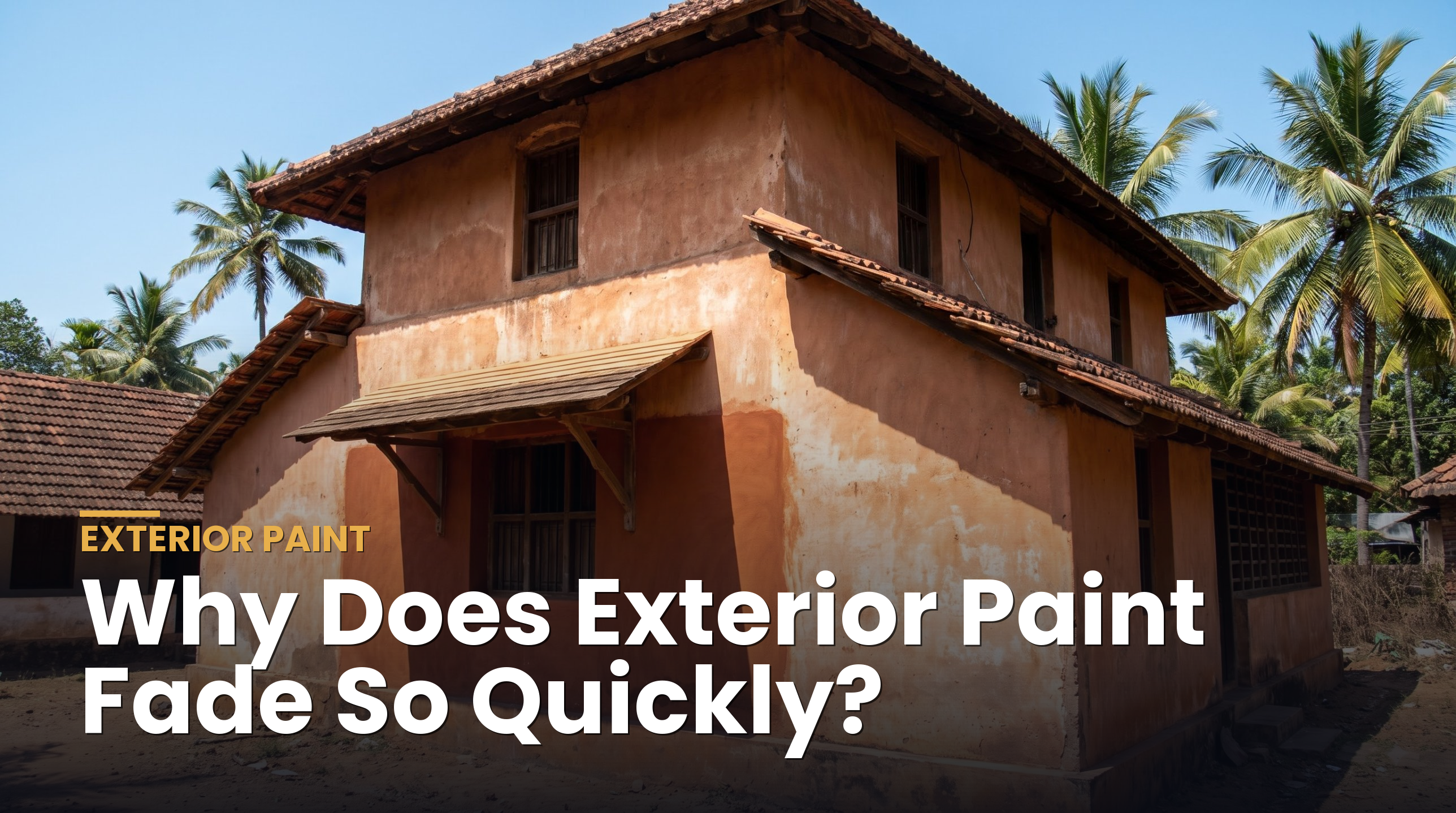
In Kerala, moisture is behind most peeling. The long monsoon and high humidity push water through walls that are not properly waterproofed, and the paint lifts in sheets or bubbles. That is why simply repainting rarely works: if the water is still coming, the new paint peels too.
How do you tell which cause is yours?
Read the symptoms to find the cause and the right fix.
| Symptom | Likely cause | Fix |
|---|---|---|
| Bubbling, damp smell, worse after rain | Moisture behind the wall | Stop the water, use a waterproof primer |
| Paint lifts in large sheets with old paint attached | Painted over failing old paint | Strip back to sound surface, prime, repaint |
| Flaking on a chalky or dusty surface | Poor prep or no primer | Clean, prime, repaint |
| Peeling around windows, roof line, bathroom | Localised leak or splash | Fix leak, seal, repaint |
| White salt patches with peeling | Efflorescence from moisture | Treat damp, apply damp-proof coat |
If peeling is worse after rain or comes with a musty smell, treat it as a moisture problem first. No paint will hold on a wall that stays wet.
How do you fix peeling paint so it lasts?
Follow these steps in order. First, scrape away all loose and flaking paint with a scraper or wire brush until you reach a sound, firmly bonded surface. Do not paint over anything that lifts. Second, find and stop the moisture source: fix the roof leak, seal the exterior, or address rising damp. This is the step most people skip, and it is why their repair fails.
Third, let the wall dry completely. In humid Kerala conditions this can take several days. Fourth, prime the surface. On a wall that had damp, use Super Seal Fibre Primer, a fibre-technology waterproof primer that seals the surface and stays flexible so the new paint holds. Finally, apply your topcoat. For a durable, weather-resistant finish, Majestic exterior emulsion with its crack-resistant film is an excellent choice on exterior walls. Our guide on stopping wall dampness before the monsoon covers the moisture side in detail.
How do you stop paint peeling in the future?
Three habits prevent repeat peeling. Always prepare the surface properly: clean off dust, grease, and chalk, and scrape any loose paint before repainting. Always prime, especially on new plaster, repaired patches, or previously damp walls. And always deal with moisture at the source, because waterproofing the wall is what keeps paint attached through the monsoon.
On walls that have a history of damp, build in protection: a waterproof primer like Super Seal under a quality topcoat, and exterior waterproofing such as Aqua Seal or Damp Shield where water enters. Spend the effort on prep and moisture control and a good topcoat will stay put for years instead of flaking within a season.
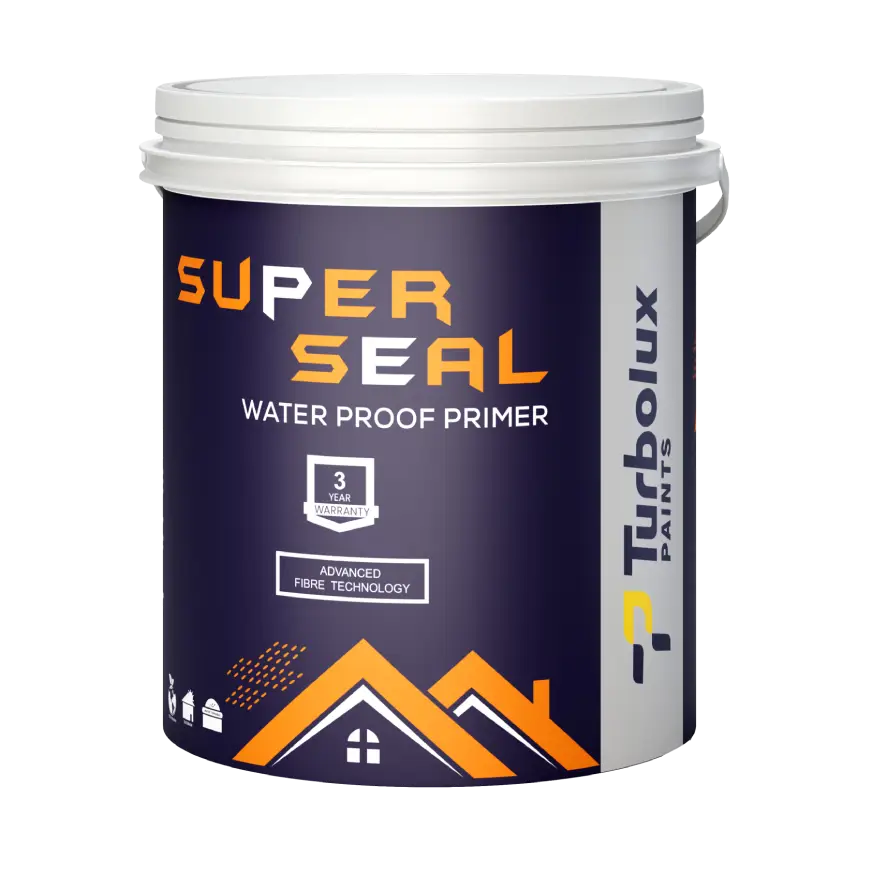
Fibre-technology waterproof premium primer that seals damp walls before painting.
3 Year WarrantyView Super Seal →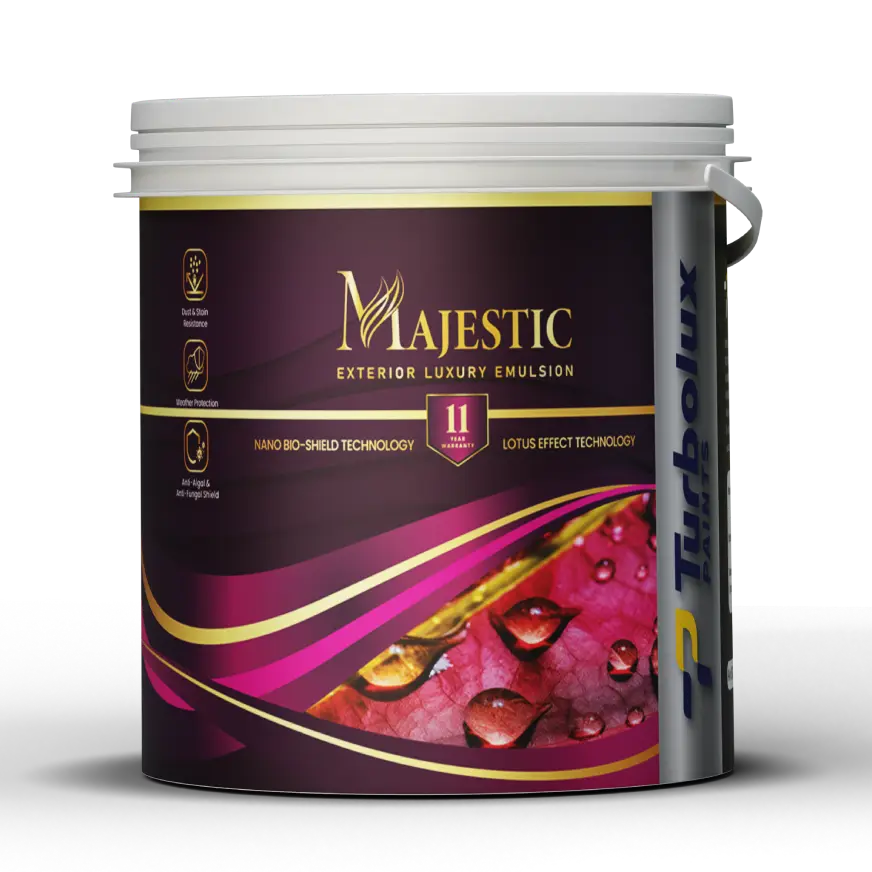
Lotus Effect self-cleaning, Nano Bio-Shield and a crack-resistant film.
12-Year WarrantyView Majestic →Frequently asked questions
Why is my paint peeling off the wall in sheets?
Usually because it was applied over old, failing paint or a poorly prepared surface, or because moisture is pushing it off from behind. Scrape back to a sound surface, fix any damp source, prime, and repaint. If it is worse after rain, treat it as a moisture problem first.
Can I just paint over peeling paint?
No. New paint over loose, flaking paint will peel with it. You must scrape off everything that lifts, reach a firmly bonded surface, prime, and only then repaint. Painting over the problem wastes the new coat.
Why does my paint keep peeling even after I repaint?
Because the underlying cause, almost always moisture, was never fixed. If water keeps seeping through the wall, any new paint will lift too. Stop the water with waterproofing and a waterproof primer like Super Seal, then repaint.
Does primer really stop peeling?
Primer greatly reduces peeling by giving the topcoat a surface to bond to and sealing porous or repaired areas. On damp-prone walls, a waterproof primer like Super Seal also blocks moisture. Primer plus fixing the moisture source is the reliable combination.
How long should I wait for a wall to dry before repainting?
Until it is dry to the touch and shows no dark damp patches, which in humid Kerala weather can take several days after you stop the water source. Painting a wall that is still wet is the most common reason a repair fails, so do not rush this step.
Fix peeling paint for good
Scrape, stop the damp, prime with Super Seal, and finish with a durable Turbolux topcoat. Your walls stay smooth and intact.
Find your Turbolux paint →Made in Kerala for Kerala’s climate.