They look identical in the can, but exterior and interior primers are built for opposite jobs. Here is how to pick the right one.
Short answer: An exterior primer is formulated to survive weather: it resists rain, humidity, UV heat and the alkaline attack of exposed masonry, and it stays flexible as the wall expands and contracts. An interior primer is optimised for a smooth, even, high-coverage base under decorative emulsion in a protected environment. Using interior primer outside leads to early peeling in Kerala’s monsoon; using exterior primer inside works but wastes money and gives a slightly coarser base. Match the primer to the wall.
What does a primer actually do?
Every primer has the same three core jobs: seal a porous surface, even out absorption so the topcoat dries uniformly, and create a bonding layer the paint can grip. On bare cement plaster this is not optional; unprimed emulsion loses its binder into the wall and fails years early. We made the full case in Do You Really Need a Primer Before Painting?
Where exterior and interior primers part ways is in what happens after those three jobs are done. One has to survive the weather. The other has to look perfect.
What makes an exterior primer different?
An exterior wall in Kerala gets hammered: 3,000 mm of annual rain in many districts, months of 80 to 90 percent humidity, and afternoon surface temperatures hot enough to cook the paint film. An exterior primer is engineered for exactly this.
- Weather and moisture resistance. The dried film tolerates repeated wetting and drying without softening or losing grip.
- Alkali resistance. Exposed masonry keeps releasing alkaline salts as moisture moves through it. Exterior primers resist this attack so the topcoat does not saponify and peel.
- Flexibility. Exterior walls expand in the afternoon heat and contract at night. The primer film flexes with them instead of cracking.
- Fast drying. A fast-drying formula like Turbolux Exterior Primer lets crews beat the evening humidity and unexpected showers between coats.
If you are repainting a full elevation, the primer coat is step two of the process we detailed in the Exterior Wall Painting Step-by-Step Guide.
What makes an interior primer different?
Indoors, the enemies are different: uneven patches that telegraph through the emulsion, poor coverage that forces a third topcoat, and surfaces like putty-finished walls that need a consistent base. An interior primer is optimised for finish quality.
- Smoothness. It levels out into a fine, even film that makes premium interior emulsions look their best.
- Coverage and economy. A good interior primer means the topcoat covers in two coats instead of three, which usually pays for the primer itself.
- Low odour, water-based. Turbolux Interior Primer is a water-based undercoat, so rooms stay liveable during the job.
- Adhesion over putty. It binds putty-finished and previously painted surfaces so the emulsion does not flake at the putty interface.
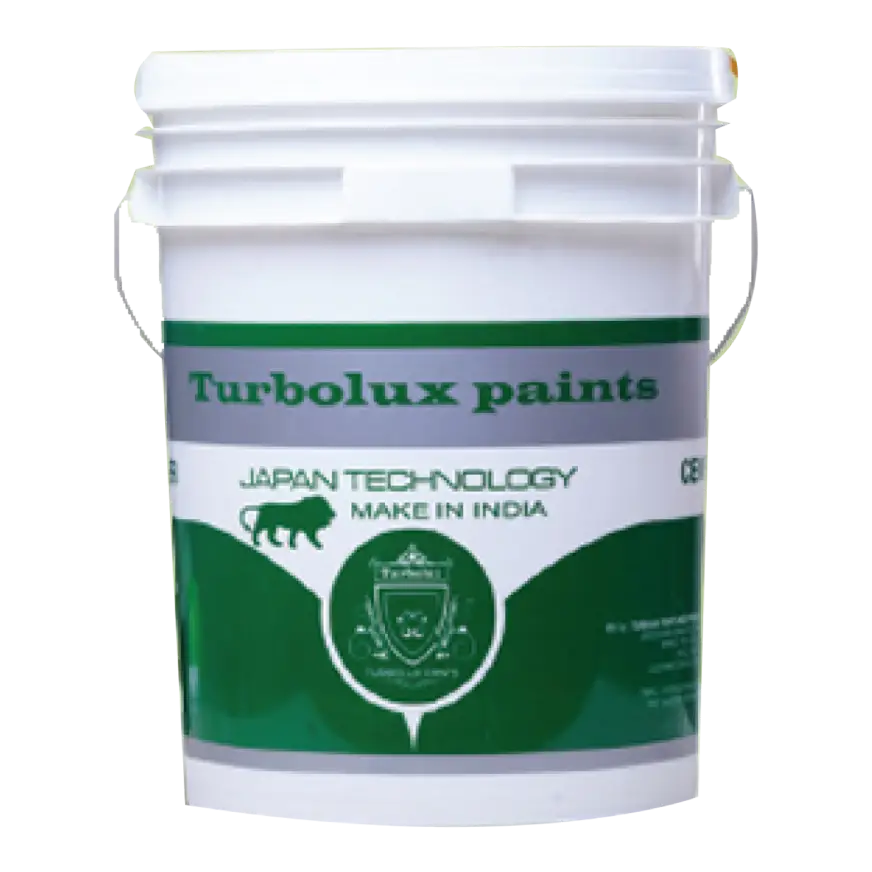
A water-based fast-drying primer for exterior walls.
Fast-Drying UndercoatView Exterior Primer →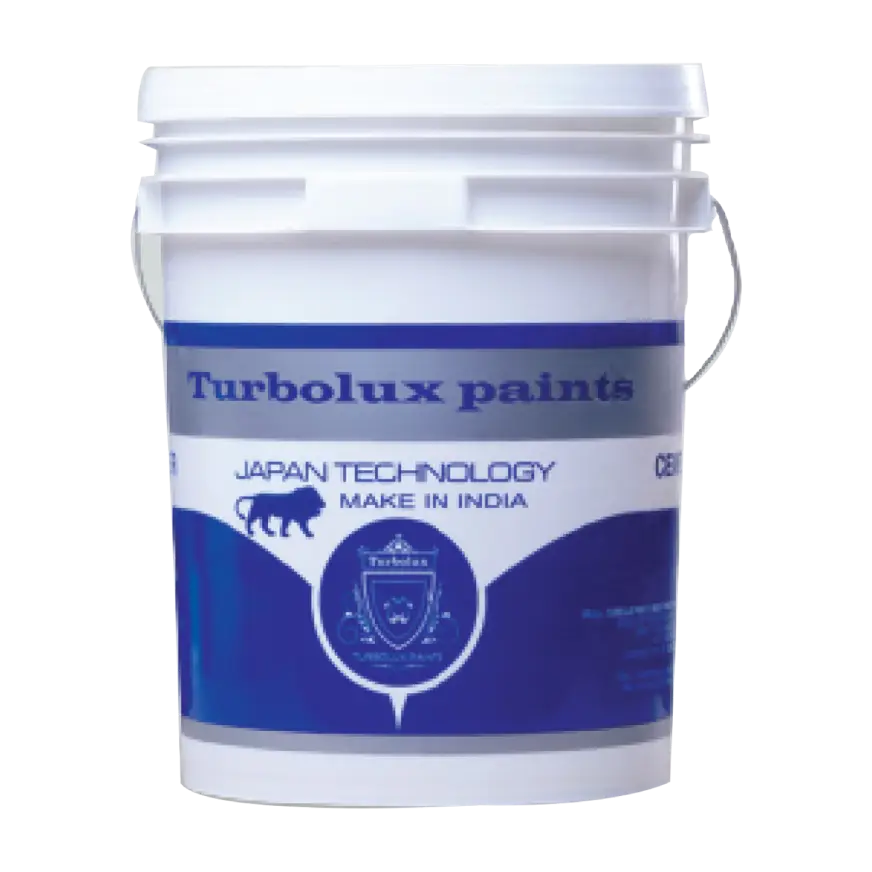
A water-based undercoat that improves adhesion and coverage.
Water-Based UndercoatView Interior Primer →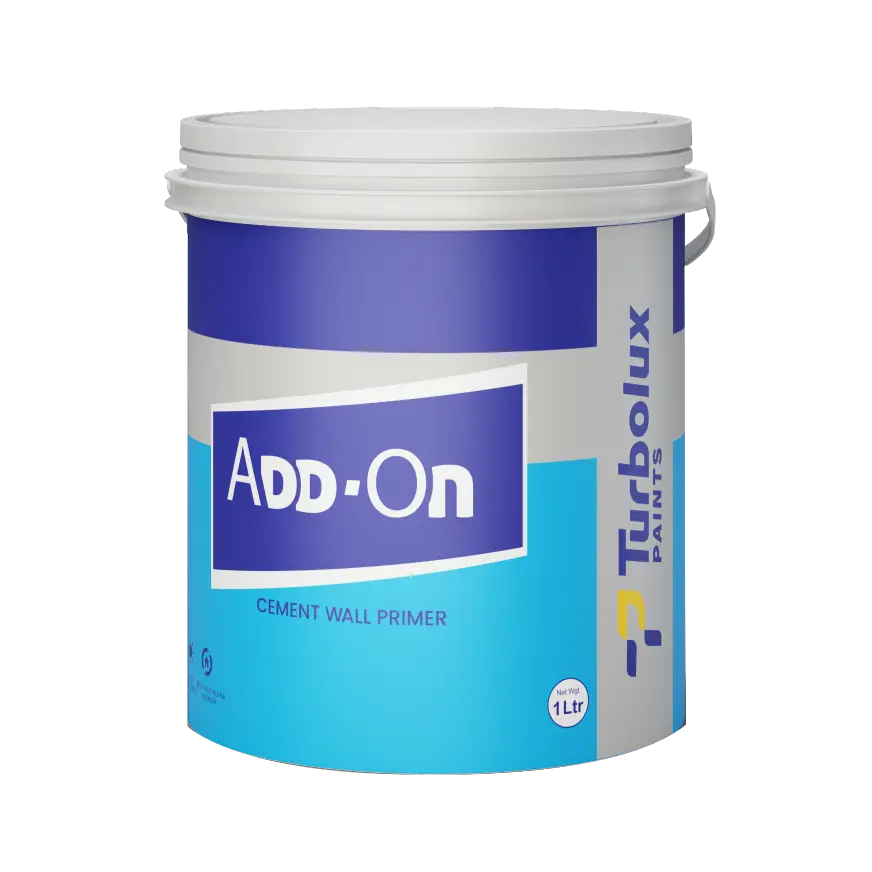
A budget multi-purpose cement wall primer for walls and roof.
Multi-PurposeView Add-On →Can you use interior primer outside, or exterior primer inside?
Interior primer outside: no. It has neither the alkali resistance nor the wet-dry durability for exposed masonry. It may look fine for the first dry season, then the first full monsoon gets under the film and the topcoat peels in sheets. Repairing that failure costs far more than the right primer would have.
Exterior primer inside: it works, but it is not ideal. You pay extra for weather resistance you do not need, and the base is tuned for durability rather than the ultra-even finish premium interior emulsions deserve. Use it indoors only to finish a leftover can on a store room or garage.
The budget middle path: a multi-purpose cement primer like Add-On handles both sides of the wall acceptably for economy repaints. For premium topcoats, stay with the dedicated primer for each surface.
Which primer should you choose? A side-by-side comparison
| Property | Exterior Primer | Interior Primer |
|---|---|---|
| Main job | Survive weather and hold the topcoat on | Perfect, high-coverage base for emulsion |
| Weather resistance | High: rain, humidity, UV heat | Not designed for exposure |
| Alkali resistance | High, for exposed masonry | Moderate |
| Film character | Tough and flexible | Fine, smooth, even |
| Drying | Fast-drying for monsoon-window painting | Standard, low odour |
| Use under | Alpha Advanced, More Life, Majestic | Dew, Ultra Ceiling White, interior emulsions |
Frequently asked questions
Can I use exterior primer indoors?
Yes, it will adhere and seal properly, but it costs more and gives a slightly coarser base than a dedicated interior primer. Use it indoors only to consume leftovers on low-visibility areas.
What happens if I use interior primer on outside walls?
It typically fails within one or two monsoons. Moisture and alkali attack the film, and the topcoat peels or blisters. Always use an exterior or multi-purpose cement primer outdoors.
Is cement primer the same as wall primer?
Cement primer is a type of wall primer made for masonry and plaster surfaces. Multi-purpose cement primers like Add-On work indoors and outdoors, while dedicated interior and exterior primers are tuned for their specific environment.
How long after priming can I paint?
Most water-based primers recoat in 4 to 6 hours in dry weather. During humid monsoon months, give the primer overnight before applying emulsion.
Do I need primer on already painted walls?
If the old paint is sound, clean and the same type, you can often repaint directly after a light sanding. Prime again wherever old paint is chalky, patchy, or you have repaired with putty.
Get the base coat right
Tell us your surface and we will match the primer and topcoat system for it.
Find your Turbolux paint →Made in Kerala for Kerala’s climate.