What actually matters when you pick an interior emulsion for a humid, high rainfall home.
Short answer: The best interior emulsion for a Kerala home is a water based acrylic emulsion with a smooth low sheen film, good stain release and resistance to the humidity that sits inside our houses for half the year. Turbolux Dew is built for exactly this, with GLATT technology giving a silky matte surface that resists dust pickup and wipes clean without burnishing. Pair it with Turbolux Interior Primer over properly cured plaster and you get an even finish that holds its colour for years instead of turning patchy after one monsoon.
What makes an interior emulsion right for Kerala?
Interior paint in Kerala has an unusual job. It is not fighting sun or rain directly, but it lives in air that carries 75 to 90 percent relative humidity for months at a stretch. That moisture moves through plaster, condenses on the cooler side of a wall and slowly works at anything sitting on the surface. A paint that performs beautifully in a dry inland city can go chalky, blotchy or mouldy here within two seasons.
So the qualities that matter indoors are different from the ones brochures usually shout about. Colour depth is nice. What actually decides whether your wall looks good in year four is film quality, adhesion and how the surface behaves when it gets damp and then dries again.
Look for these four things:
- A tight acrylic film. Water based acrylic emulsions form a continuous, flexible film that breathes slightly but does not soak up moisture the way a distemper does.
- Smooth surface texture. A rough microscopic surface traps dust and spores. A smoother film stays cleaner for longer with no extra effort from you.
- Good stain release. Kerala homes see a lot of traffic, children, cooking and doorway smudges. You want marks to lift with a damp cloth rather than needing a repaint.
- Low odour and low VOC. Our windows are shut through heavy rain. A paint that keeps smelling for a week is a real problem, not a minor one.
Emulsion, distemper or enamel indoors?
This is still the first question most homeowners ask, usually because a contractor quoted three very different rates. The price gap is real, but so is the difference in how long each one lasts.
| Type | Typical life indoors | Humidity behaviour | Cleanability | Best use |
|---|---|---|---|---|
| Acrylic emulsion | 6 to 8 years | Stable, resists mould growth | Good, wipes clean | All living areas, bedrooms, halls |
| Distemper | 1 to 3 years | Absorbs moisture, powders and flakes | Poor, rubs off when wiped | Temporary or very low budget work |
| Enamel | 5 to 7 years | Stable but non breathable | Very good | Doors, grills, joinery, not full walls |
| Dedicated ceiling white | 5 to 7 years | Stable, hides hairline flaws | Moderate | Ceilings only |
In a Kerala climate, distemper is almost always a false economy. It absorbs moisture from humid air, and once the binder softens the surface starts to chalk. You end up repainting twice in the time an emulsion would have carried you through. Enamel goes the other way, forming a sealed non breathable skin that traps moisture inside the plaster, which is why it belongs on woodwork and metal rather than across a whole wall. Emulsion sits in the middle and that is exactly where you want to be. For a fuller comparison see our guide to interior wall painting in Kerala homes.
Which sheen level should you choose?
Sheen is the amount of light your paint film reflects. It changes both how a room feels and how the wall behaves in daily use.
Matte and silky matte reflect very little light. They hide small plaster imperfections, which matters in older Kerala houses where walls are rarely perfectly flat, and they give a soft calm look. Older matte paints had a reputation for marking easily, but a modern silky matte with good stain release does not have that problem.
Satin and sheen finishes bounce more light. They suit narrow passages and rooms with small windows, and they take cleaning well. The trade off is that every dent and trowel line in the plaster shows up under raking light.
Gloss belongs on doors, frames and feature panels, not on general wall area indoors.
For most Kerala homes we suggest a silky matte through bedrooms and living areas, and moving to a higher sheen only in corridors and stairwells. If you are working with a compact room, sheen and colour interact in useful ways, which we cover in interior colours that make small rooms look bigger.
Why does interior paint fail in humid homes?
When interior paint fails here, the paint is usually not the first problem. It is the messenger.
Painting over damp plaster. New plaster needs 21 to 28 days to cure. During monsoon it can need longer. Paint applied over plaster that is still releasing moisture will blister or peel, no matter how good the product is.
Skipping primer. Bare plaster is alkaline and porous. Without a primer it drinks the first coat unevenly, which is why you get patchy colour and poor coverage that no third coat quite fixes.
An external leak. Black patches on an internal wall very often mean water is entering from outside or from a bathroom on the other side. Repainting will hide it for a few weeks and then it returns. Fix the source first, and our guide on how to stop wall dampness and seepage walks through how.
Thin coats. Two proper coats at the recommended spread rate outperform three thin, over diluted ones every time. Over dilution is the single most common site shortcut and it directly cuts the life of the film.
Which Turbolux products should you use?
For a standard Kerala interior the system is simple. Prime the wall, then two coats of emulsion.
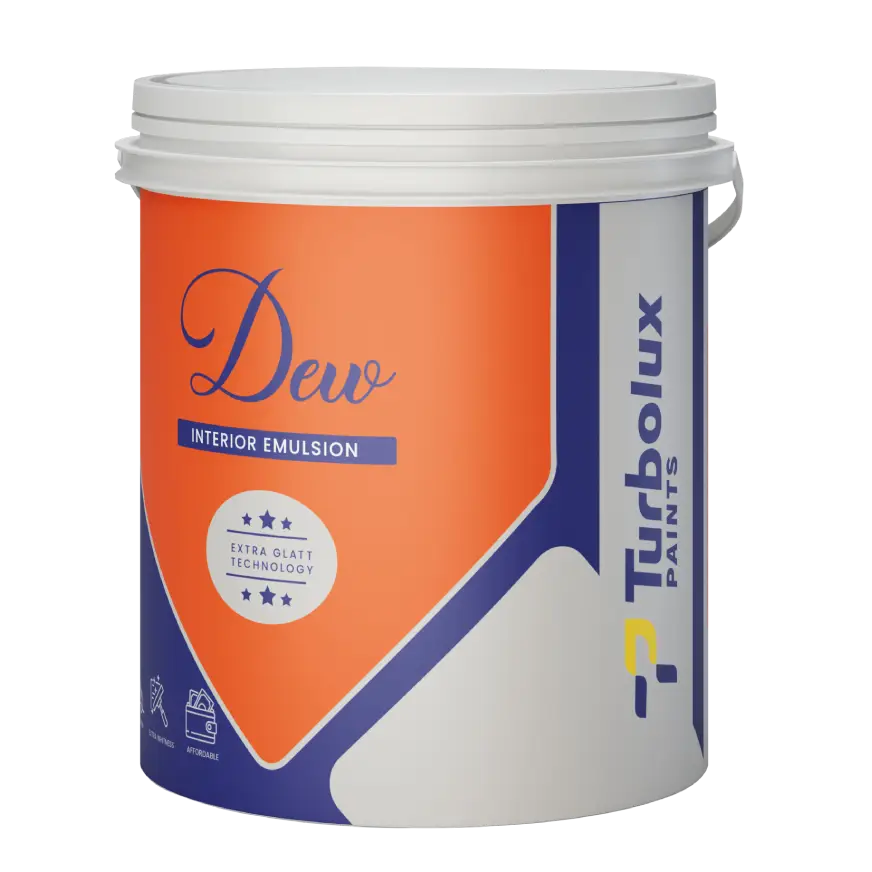
A silky matte interior emulsion with GLATT technology for a smooth, low dust pickup finish.
Silky Matte FinishView Dew →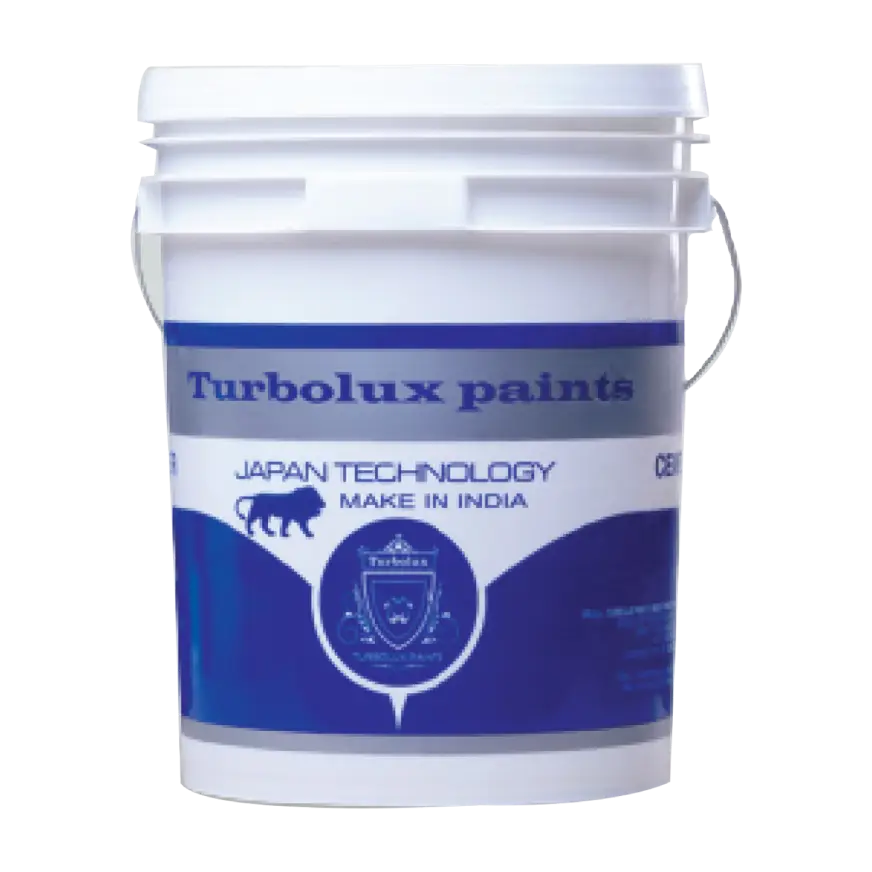
A water based undercoat that improves adhesion and evens out porous plaster.
Water-Based UndercoatView Interior Primer →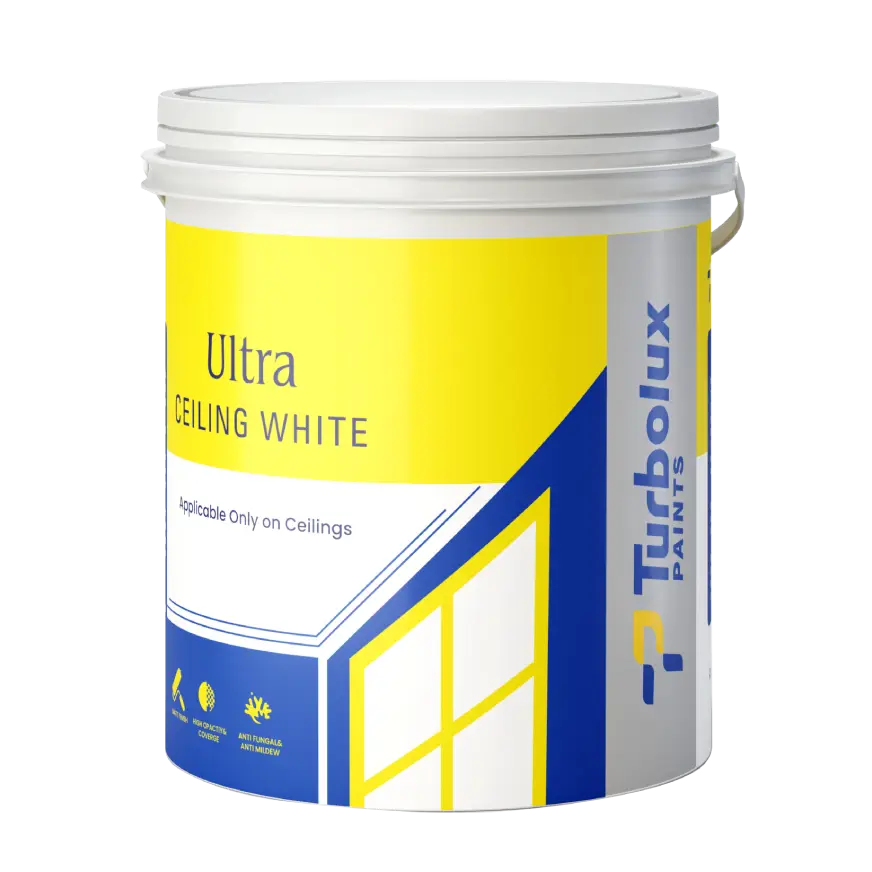
A dedicated ceiling paint that hides imperfections and stays flat white overhead.
Green AssuredView Ultra Ceiling White →A note on ceilings. Using leftover wall emulsion on the ceiling is common and it is a mistake. Ceilings need higher opacity and a flatter film so that light raking across them does not reveal every joint, and a dedicated ceiling white is formulated for that.
How much paint will you need?
A rough working figure for a smooth primed interior wall is 120 to 140 square feet per litre per coat. Fresh plaster and textured surfaces will pull more.
| Room size | Approx wall area | Emulsion for 2 coats | Primer for 1 coat |
|---|---|---|---|
| 10 x 10 ft bedroom | 360 sq ft | 5 to 6 litres | 3 litres |
| 12 x 14 ft living room | 520 sq ft | 8 to 9 litres | 4 litres |
| Full 3 BHK, walls only | 2600 sq ft | 38 to 44 litres | 20 litres |
Buy the full quantity in one purchase from the same batch. Topping up later can bring a slight shade variation, which shows most on a large uninterrupted wall.
Frequently asked questions
Which paint is best for interior walls in Kerala?
A water based acrylic emulsion with a smooth low sheen film. It handles high humidity without chalking, resists mould growth better than distemper and cleans up with a damp cloth. Turbolux Dew is formulated for this climate.
How long does interior emulsion last in a humid climate?
A properly primed and correctly applied acrylic emulsion should give you 6 to 8 years indoors. Where it fails early the cause is almost always damp plaster, a missing primer or over diluted coats rather than the paint itself.
Can I paint interior walls during the monsoon?
You can, provided the wall is dry and the room has some air movement. Drying takes longer, so allow 6 to 8 hours between coats instead of the usual 4. Do not paint a wall that is actively damp or cool to the touch.
Do I really need a separate primer for interiors?
On bare or newly plastered walls, yes. Primer seals the porous alkaline surface so your emulsion covers evenly and adheres properly. On a sound previously painted wall in good condition you can often go straight to emulsion.
Is matte or satin better for a Kerala home?
Silky matte for bedrooms and living areas, because it hides plaster imperfections and gives a softer look. Satin for corridors, stairwells and any surface that gets touched often, since the extra sheen takes repeated cleaning well.
Ready to repaint your interiors?
Tell us your room sizes and surface condition and we will suggest the right system and quantity.
Find your Turbolux paint →Made in Kerala for Kerala’s climate.