
The pooja room is the first space many families refresh before Diwali, Vishu or Navaratri. Here are 12 Turbolux shades that keep a prayer space calm, bright and welcoming, and how to paint it so the finish lasts through lamps, incense and daily cleaning.
Short answer: The best pooja room colours are light, warm and calm. Pure whites and ivories such as Gangotri Chalk and Dhoop Dawn keep a small prayer space bright and clean. Soft creams and sandalwood tones such as Sarson Dawn and Sarson Light feel warm and peaceful. Marigold, saffron and turmeric shades such as Kesari Mid, Varkala Mid and Haldi Night work best as an accent on the back wall, niche or border. Use a sheen finish so soot and oil marks wipe off more easily, and keep the ceiling white.
What colours suit a pooja room?
A pooja room is usually small, often without a window, and lit by lamps and a single bulb. The right colours keep it bright, calm and easy to keep clean:
- Whites and ivories reflect the most light and make a compact space feel open and pure.
- Soft creams and sandalwood add warmth and glow beautifully in lamp light.
- Marigold, saffron and turmeric carry a festive, devotional warmth, but are best used as accents in a small room.
- Pale tulsi green is a gentle, natural alternative for families who prefer a cooler tone.
Many families also follow Vastu or family tradition when choosing colours. The shades below are flexible enough to fit most of those preferences.
What are the 12 best pooja room shades?
All 12 are from the Turbolux colour range. LRV (Light Reflectance Value) shows how much light a colour reflects, from 0 for black to 100 for white.
| Shade | Code · Hex | LRV | Character | Best for |
|---|---|---|---|---|
| Gangotri Chalk | TLX-0019 · #FBFBFA | 96 | Pure bright white | Whole room, small spaces |
| Dhoop Dawn | TLX-0241 · #F4F2E3 | 88 | Soft ivory | Walls with brass and wood |
| Sarson Dawn | TLX-0169 · #F3EFE1 | 86 | Warm cream | Whole room |
| Gokarna Dawn | TLX-0205 · #F0EDDB | 84 | Pale sandal | Walls, niche backgrounds |
| Lepakshi Dawn | TLX-0913 · #E0EDE0 | 82 | Pale tulsi green | Calm, cool alternative |
| Sarson Light | TLX-0170 · #E7DAB1 | 70 | Sandalwood | Back wall, behind the shelf |
| Sindoor Light | TLX-0260 · #E5BDAA | 56 | Soft saffron peach | Back wall, arches |
| Thar Wash | TLX-0183 · #E2CE83 | 62 | Soft gold | Niche, border band |
| Kesari Mid | TLX-0136 · #E2B350 | 49 | Marigold | Accent wall, arch outline |
| Jaisalmer Deep | TLX-0155 · #E8AE17 | 47 | Bright marigold | Small accents, borders |
| Varkala Mid | TLX-0322 · #E19147 | 37 | Saffron | Back wall accent |
| Haldi Night | TLX-0132 · #C48508 | 29 | Turmeric gold | Deep accent, niche interior |
Ask your dealer for the shade card and test a sample under your own pooja room lighting, since lamp light makes warm colours look richer.
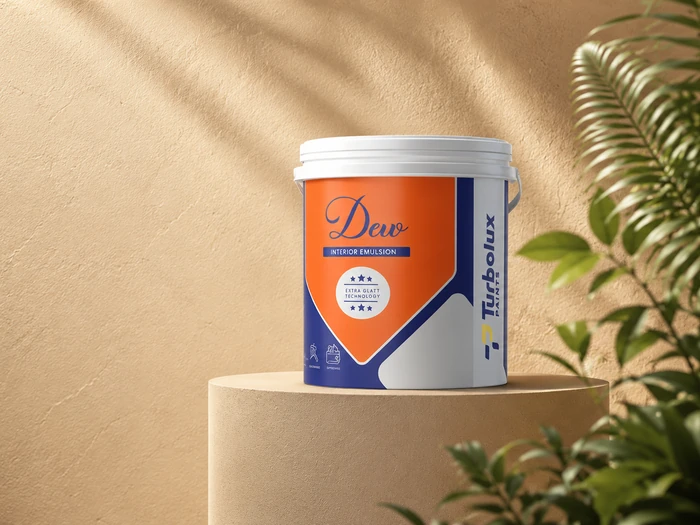
An interior emulsion with excellent whiteness and a soft sheen. GLATT Technology makes it more durable and glossy, for homes and commercial spaces.
Interior sheen · Tinted at your dealerView Dew →How do you combine pooja room colours?
| Main walls | Accent | Mood |
|---|---|---|
| Gangotri Chalk (pure white) | Kesari Mid (marigold) on the back wall | Bright, festive, traditional |
| Dhoop Dawn (ivory) | Haldi Night (turmeric gold) in the niche | Rich and warm under lamps |
| Sarson Dawn (cream) | Varkala Mid (saffron) arch outline | Warm and devotional |
| Lepakshi Dawn (pale green) | Sarson Light (sandalwood) back wall | Calm and natural |
| Gokarna Dawn (pale sandal) | Thar Wash (soft gold) border band | Soft and elegant |
A simple rule for a small room: keep three walls and the ceiling light, and use the deeper colour only on the wall behind the deities or inside the niche. It draws the eye to the altar without making the room feel closed in.
Which paint finish is best for a pooja room?
- Choose a sheen emulsion, not matt or distemper. Daily lamps and incense leave a film of soot and oil, and a sheen finish wipes clean more easily.
- Keep the ceiling white. Smoke darkens ceilings first, and a bright ceiling white keeps the room feeling clean. See our guide to ceiling paint.
- Leave space around lamps. Keep oil lamps a safe distance from the wall so heat and smoke do not stain the paint directly above them.
- Avoid very glossy paint behind the deities if you have a spotlight, as a strong reflection can distract from the altar.
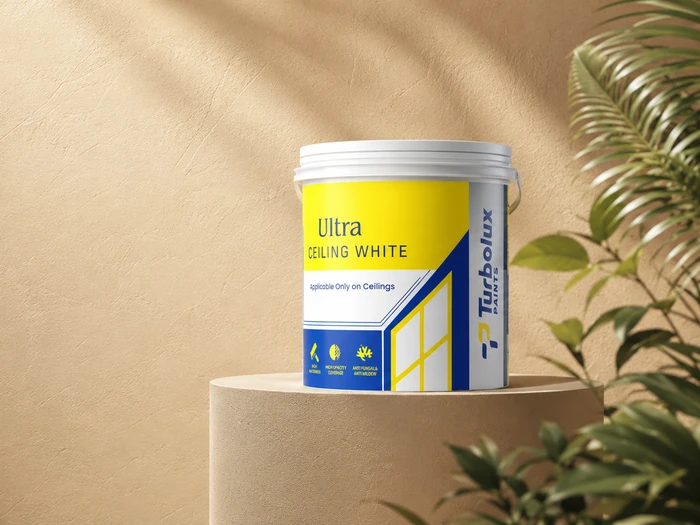
A dedicated ceiling white using Eightling Technology to hide imperfections in the surface while giving a clean contrast to coloured walls.
Ceilings · InteriorView Ultra Ceiling White →How do you repaint a pooja room before a festival?
- Plan a few days ahead. A small pooja room needs only one to two days of work, plus drying time, but painters get booked up before festivals. Our Diwali painting checklist has the full timeline.
- Move idols and frames respectfully. Wrap them in clean cloth and keep them in a safe, clean place while you paint.
- Clean off soot and oil. Wash the walls and ceiling with mild soap and water, then let them dry fully.
- Repair and prime. Fill cracks and holes, and prime any repaired or bare patches so the topcoat dries evenly.
- Apply two coats. Start with the ceiling, then the walls, then the accent wall.
- Air it out before lighting lamps. Let the paint dry and the room ventilate before you place lamps and incense back.
For more ideas on calm colours around the home, see calming wall colours and our cream wall paint guide.
Frequently asked questions
Which colour is best for a pooja room?
Light, warm colours work best: pure white, ivory, cream or sandalwood on the main walls, with marigold, saffron or turmeric gold as an accent on the back wall or niche.
Is white good for a pooja room?
Yes. White keeps a small pooja room bright and clean, reflects lamp light well and suits brass, wood and flowers. Gangotri Chalk (LRV 96) is a bright option.
Should the pooja room be painted in a dark colour?
Dark colours can make a small prayer room feel closed in. Use deep shades only as an accent inside a niche or behind the deities.
Which paint finish is easy to clean in a pooja room?
A sheen emulsion is easier to wipe than matt paint or distemper, which helps with soot and oil from lamps and incense.
How long before a festival should I paint the pooja room?
Plan at least a week ahead so painters are available and the paint can dry and air out before the festival.
Ready to refresh your pooja room?
Visit your nearest Turbolux dealer to see the shade card and get your colours tinted at the counter.
Find a Turbolux dealer →90728 26662 · [email protected] · Happy walls in just a stroke.