Paint bubbles on walls when the film loses its grip on the surface underneath. In most Kerala homes the cause is moisture, but there are seven common culprits.
Short answer: Paint bubbles on walls when the paint film loses its grip on the surface underneath, and in most Kerala homes the cause is moisture. Water or vapour trapped behind the paint pushes the film outward and forms a blister. Other common causes are painting over uncured plaster, skipping primer, painting on a dusty or oily wall, and applying coats too thickly or in direct sun. The fix is always the same in principle: find and stop the cause, scrape back to a sound surface, let it dry fully, prime, and repaint.
Here are the seven causes and exactly how to deal with each one.
What does paint bubbling look like?
Bubbling, also called blistering, shows up as raised, rounded pockets in the paint film. They can be as small as a pea or as large as your palm. Press one and it may feel soft, crunch, or release water. Bubbles are different from peeling, where the paint lifts in flakes, and from cracking, where fine lines appear. That said, bubbles left alone usually burst and turn into peeling.
What are the 7 causes of paint bubbling?
1. Dampness in the wall
This is the number one cause in Kerala. Rainwater entering through exterior walls, rising damp from the foundation, or leaking pipes inside the wall all push moisture toward the painted surface. When the moisture tries to escape, it lifts the paint. Bubbles that appear low on the wall, near bathrooms, or after heavy rain almost always point to damp.
2. Painting over new, uncured plaster
Fresh cement plaster holds a lot of water and needs time to cure and dry. Painting too early traps that water. As a rule, allow new plaster at least 28 days to cure before painting, longer during the monsoon.
3. Skipping the primer
Primer seals a porous wall and gives the topcoat something to grip. Without it, the emulsion bonds unevenly and small pockets can lift, especially on putty or plaster that absorbs moisture.
4. Dust, grease or loose old paint
Paint sticks to what’s on the surface, not the wall behind it. Dust from sanding, kitchen grease, or chalky old paint all create a weak layer that lets the new coat lift.
5. Painting in direct sun or on a hot wall
On exterior walls, strong afternoon sun dries the top of the paint film before the layer underneath has released its moisture. The trapped solvent or water vapour forms small bubbles, often within hours of painting.
6. Coats that are too thick, or recoated too soon
A heavy coat dries on the surface first and traps moisture below. Applying the second coat before the first is dry does the same. Follow the recoat time on the pack, typically several hours for water-based emulsions and longer in humid weather.
7. Incompatible paint layers
Applying water-based emulsion directly over old oil-based enamel without proper sanding and priming often ends in poor adhesion and bubbling.
How do you find the cause on your wall?
| What you see | Most likely cause | What to do first |
|---|---|---|
| Bubbles with water inside, near the floor or bathroom | Rising damp or plumbing leak | Check pipes, fix the leak, treat for damp |
| Bubbles that appear after heavy rain on an outer wall | Water seepage through the exterior | Seal cracks and waterproof the exterior |
| White powder under the bubble | Efflorescence (salts carried by moisture) | Stop the moisture, brush off salts, then prime |
| Many small bubbles within hours of painting | Heat, direct sun or a thick coat | Sand smooth and repaint in the shade |
| Dry bubbles across a new wall | Uncured plaster or no primer | Let the wall dry, then prime before repainting |
A simple test for damp: tape a 30 cm square of clear plastic sheet tightly to the wall and leave it for 24 hours. If droplets form under the plastic, moisture is coming from inside the wall.
How do you fix bubbling paint, step by step?
- Stop the moisture source. Repair leaking pipes, seal cracks, fix roof or terrace leaks, and correct any drainage near the wall. Repainting before this step simply wastes paint.
- Scrape off every bubble. Use a scraper to remove all blistered and loose paint until you reach paint that’s firmly bonded.
- Sand the edges. Feather the edges of the scraped area with 120 to 180 grit sandpaper so the repair doesn’t show.
- Let the wall dry completely. This can take several days, longer in the monsoon. A moisture meter reading helps, and your painter or dealer can check it.
- Treat the damp area. On walls with a history of damp, apply a damp-proof coating before primer.
- Fill and level. Fill any dents with putty and sand smooth once dry.
- Prime. Apply one coat of a suitable primer to seal the repaired area.
- Repaint in thin, even coats. Apply two coats of emulsion, respecting the recoat time, and avoid painting exterior walls in strong midday sun.
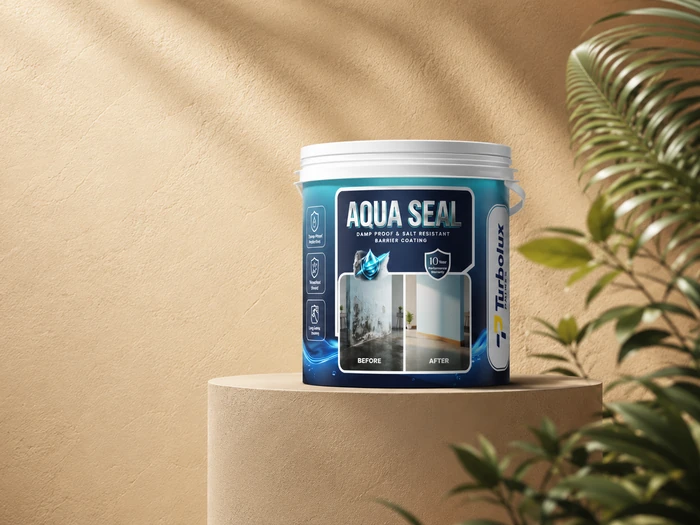
A damp-proof, salt-resistant barrier coating on Nano-Polymer Technology that stops dampness and efflorescence at the source.
Waterproofing · 10-year warrantyView Aqua Seal →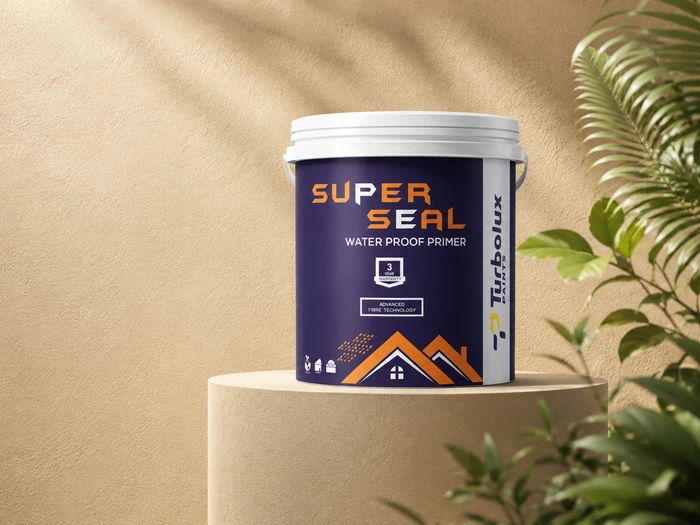
A premium acrylic primer on fibre technology, resisting alkali, damp and efflorescence, so the topcoat doesn’t lift again.
Primer · Fibre TechnologyView Super Seal →How do you stop paint bubbling from coming back?
- Waterproof the exterior first. Most interior bubbling in Kerala starts on the outside. Our guide on stopping wall dampness and seepage before the monsoon covers the checks.
- Never skip primer. Use an interior primer inside and an exterior primer outside.
- Paint in the dry season. Low humidity and dry walls give the best adhesion.
- Keep coats thin. Two thin coats always perform better than one thick coat.
- Ventilate bathrooms and kitchens. An exhaust fan cuts the condensation that lifts paint on inside walls.
Frequently asked questions
Will paint bubbles go away on their own?
Bubbles caused by trapped moisture may flatten when the wall dries, but the paint has already lost adhesion and they usually return or burst. The only lasting fix is to scrape, dry, prime and repaint.
Can I just pop the bubbles and paint over them?
No. Popping a bubble leaves loose paint around it, and the new coat will lift with it. Scrape back to firmly bonded paint before repainting.
Why is my new paint bubbling within a day?
Bubbles that appear within hours usually come from painting on a hot wall, in direct sun, over a damp surface, or applying a coat too thickly.
Is bubbling paint a sign of a bigger problem?
Often, yes. Repeated bubbling in the same spot usually means water is getting into the wall from a leak, a crack or rising damp, and that should be fixed before it damages the plaster.
How long should I wait before repainting a damp wall?
Wait until the wall is fully dry, which can take a few days to a few weeks depending on the weather. Stop the moisture source first, then check dryness before priming.
Fix it once, not every monsoon
Talk to your nearest Turbolux dealer about the right damp-proofing, primer and topcoat for your wall.
Find a Turbolux dealer →90728 26662 · [email protected] · Happy walls in just a stroke.