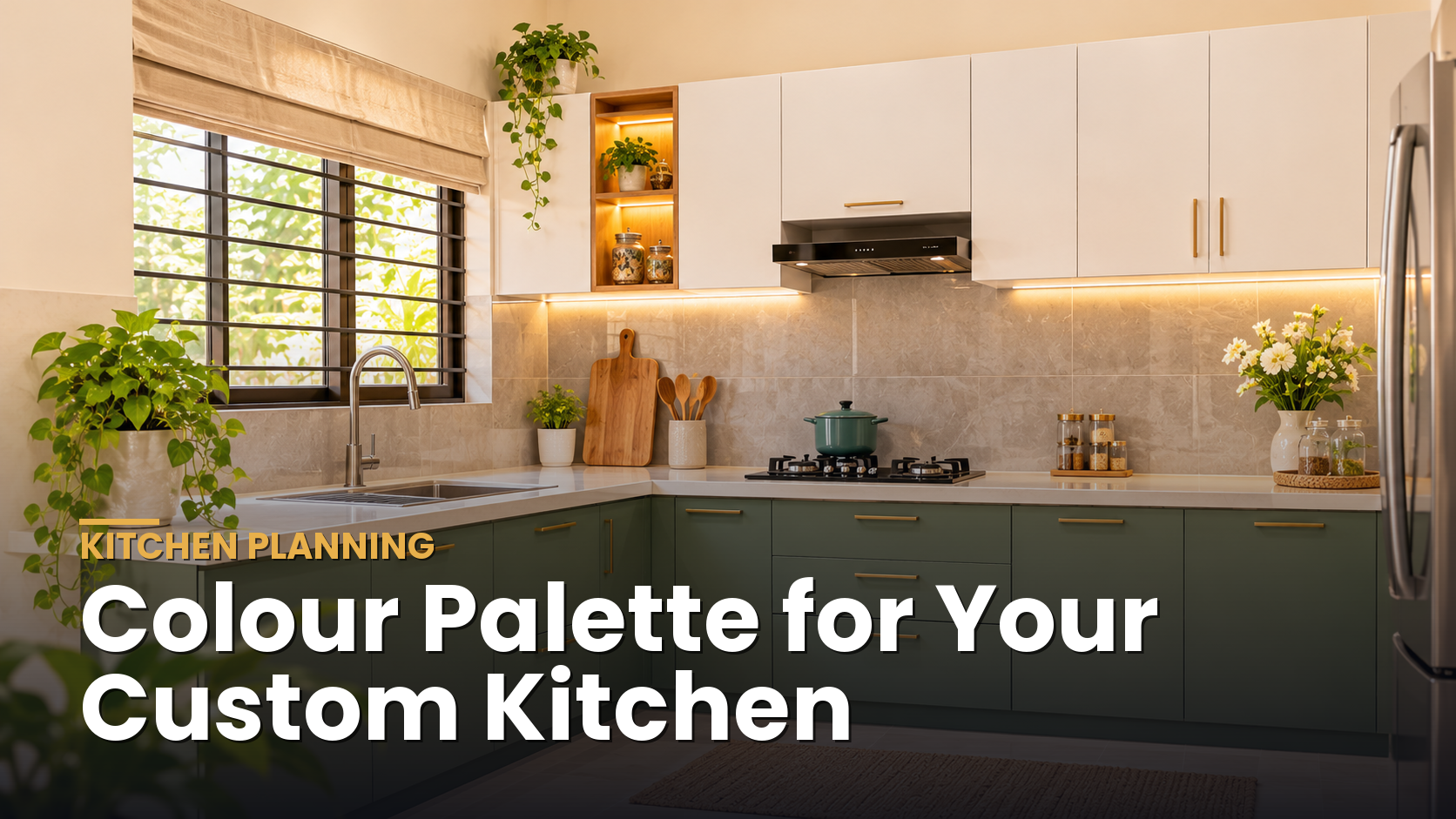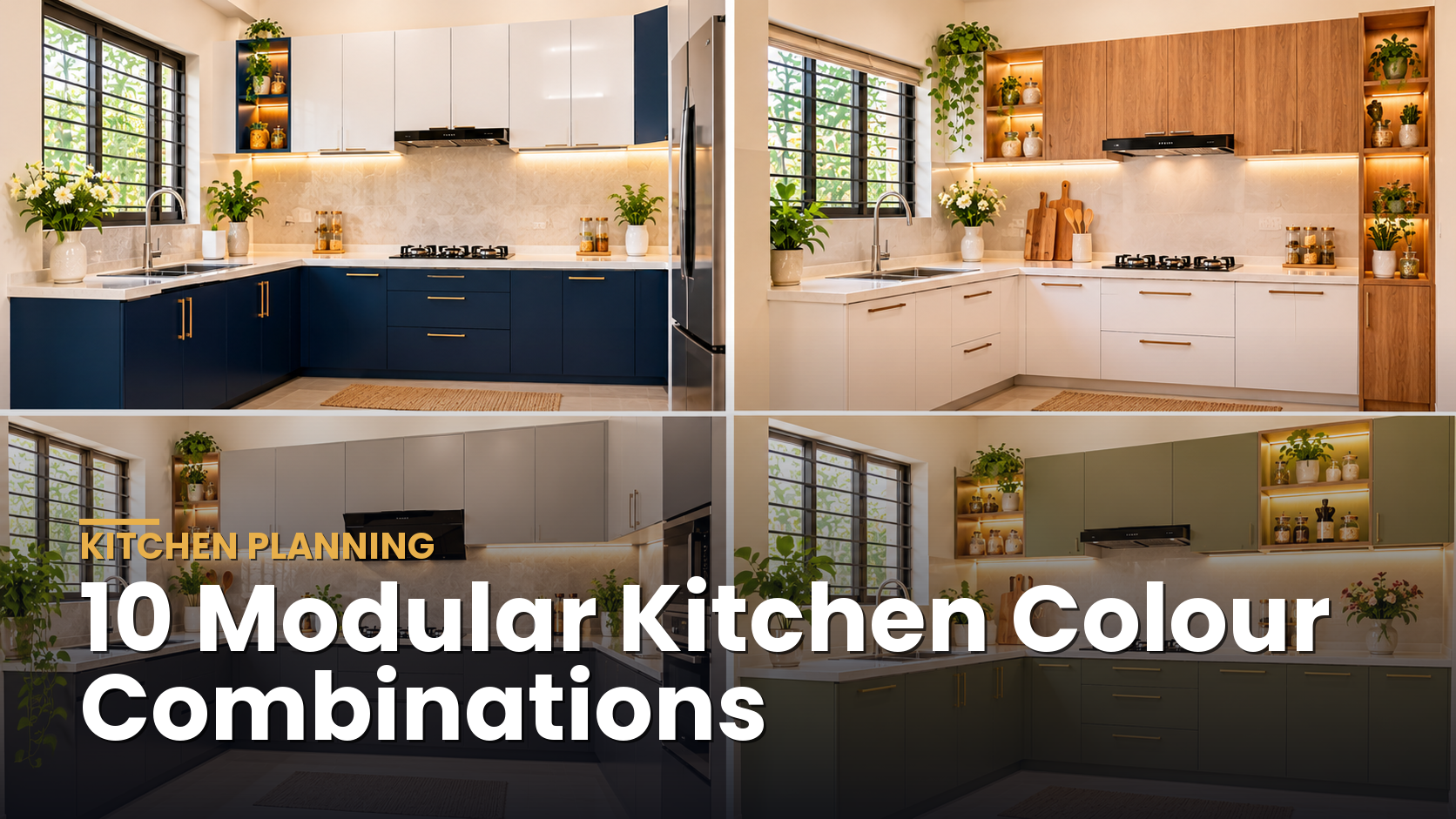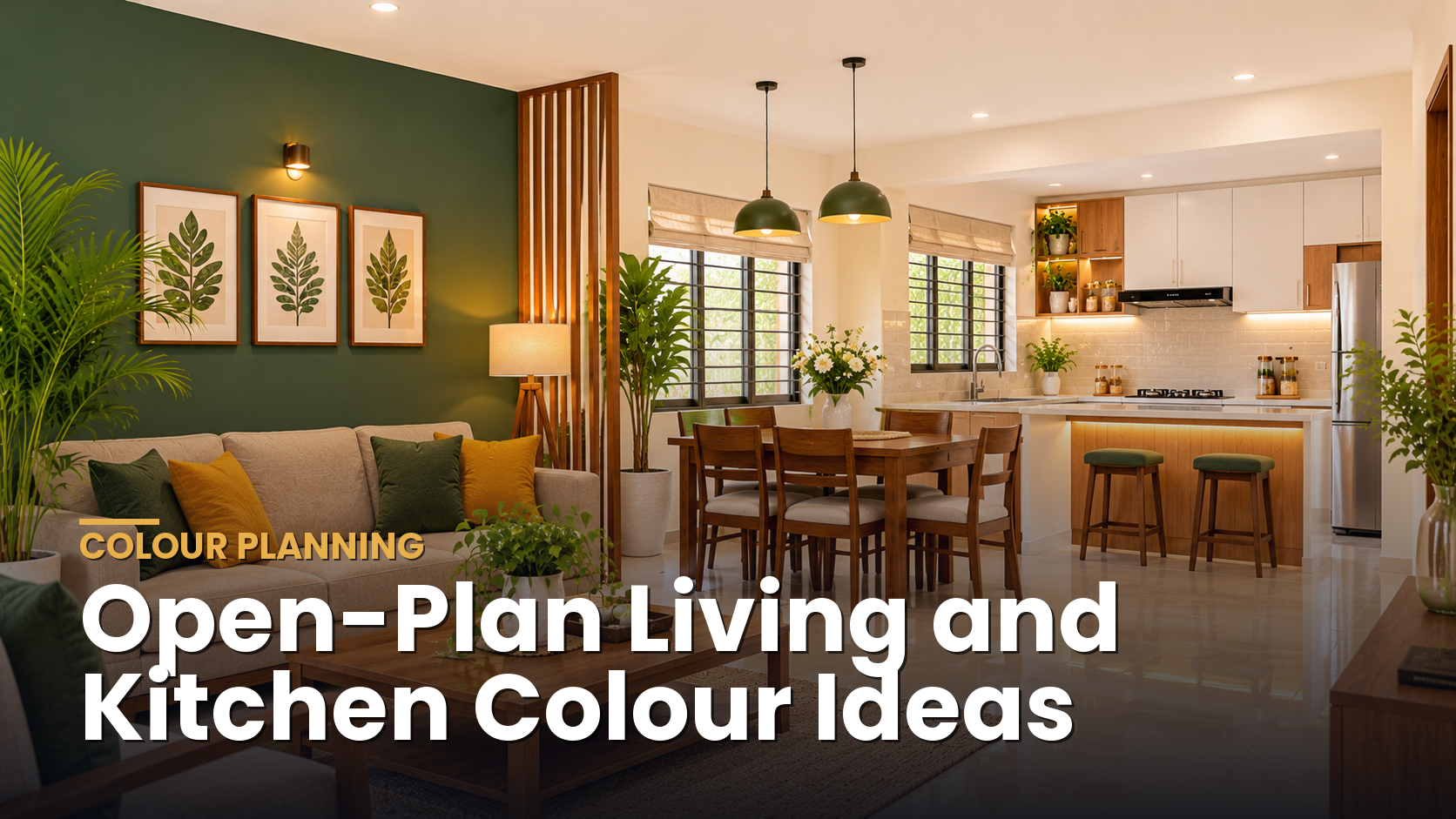
A simple, step-by-step method to choose a colour palette for your whole house, inside and out, so every room feels connected.
Short answer: To choose a colour palette for your house, start with what you cannot change (floors, furniture, wood, light), pick one main neutral for most walls, add one or two supporting colours, and keep one accent colour for small areas. Use the 60-30-10 rule, match undertones (warm or cool), test large samples in daylight and evening light, and repeat the same few colours across rooms so the house flows.
Choosing colours one room at a time often ends with a house that feels patchy. A palette, a small set of colours used throughout, makes every room look planned. Here is a method that works for Indian homes, whether you are building new or repainting.
What is a house colour palette?
A house colour palette is a short list of colours, usually 3 to 5, that you use throughout the home. Every room uses colours from this list in different amounts, so moving from one room to the next feels smooth. It does not mean every room looks the same. It means they look related.
| Palette role | How many | Where it goes |
|---|---|---|
| Main neutral | 1 | Most walls and ceilings |
| Supporting colours | 1 to 2 | Bedrooms, feature walls, kitchen |
| Accent colour | 1 | Doors, one wall, small details |
| Exterior colours | 2 to 3 | Facade, bands, plinth |
Step 1 to 3: Where do I start?
- List what stays. Floor tiles, wooden doors, kitchen cabinets, sofas and curtains often stay for years. Your palette must suit them.
- Check the light. North-facing rooms get soft, cool light; south and west rooms get strong, warm sun. The same colour looks different in each.
- Pick your main neutral. Choose one warm white, cream, greige or soft grey for most walls. This is the backbone of the palette.
| Shade | Code · Hex | LRV | Character | Best for |
|---|---|---|---|---|
| Coorg Dawn | TLX-0217 · #F3F1E1 | 87 | Warm misty white | Main neutral, warm homes |
| Mysore Dawn | TLX-0139 · #F0EADB | 82 | Warm ivory | Main neutral, wood-rich homes |
| Marari Chalk | TLX-0055 · #F3F4F3 | 90 | Soft grey-white | Main neutral, modern homes |
| Laterite Light | TLX-0290 · #E5C2AA | 58 | Warm beige | Main neutral, earthy homes |
For more neutral options see best off-white paint colours and beige wall paint shades.
What is the 60-30-10 rule?
The 60-30-10 rule is a simple way to balance colour in any room: about 60% main colour, 30% supporting colour and 10% accent.
| Share | Role | Example (living room) |
|---|---|---|
| 60% | Main colour | Warm white walls and ceiling |
| 30% | Supporting colour | Sage green feature wall, curtains, sofa |
| 10% | Accent | Mustard cushions, a teal door, brass lamps |
Apply the same rule to the whole house: about 60% of wall area in your main neutral, 30% in supporting colours, 10% in accents.
How do undertones affect a palette?
Every colour leans warm (yellow, red, orange) or cool (blue, green, grey). Mixing a warm cream with a cool grey-white often looks dirty side by side. Keep your neutrals on the same side, and let accents provide contrast.
| Undertone | Neutrals | Supporting colours | Accents |
|---|---|---|---|
| Warm | Ivory, cream, warm beige | Terracotta, olive, mustard | Deep teal, brass |
| Cool | Grey-white, cool white | Blue-grey, sage, soft blue | Navy, charcoal |
Hold the shade card next to your floor tile and wood. If it looks harmonious, the undertones match. See how to choose grey for more on undertones.
Step 4 to 7: How do I test and finalise?
- Pick supporting and accent colours. Choose one or two colours you love, in softer and deeper versions.
- Test large samples. Paint 2 by 2 ft patches on two walls in each room.
- Look at them morning, afternoon and night, with your own lights on.
- Write your palette down with shade codes, and note which room gets which colour.
| Shade | Code · Hex | LRV | Character | Best for |
|---|---|---|---|---|
| Paddy Dawn | TLX-0919 · #DCEADD | 79 | Fresh soft green | Supporting, bedrooms |
| Malpe Dawn | TLX-0709 · #DEE0ED | 75 | Calm blue-grey | Supporting, study and TV wall |
| Laterite Wash | TLX-0291 · #E0A47B | 44 | Warm laterite | Supporting, earthy accents |
| Backwater Night | TLX-0798 · #16867E | 19 | Dark teal | Accent, doors and features |
| Kanchipuram Wash | TLX-0147 · #E2C683 | 58 | Soft mustard | Accent, dining |
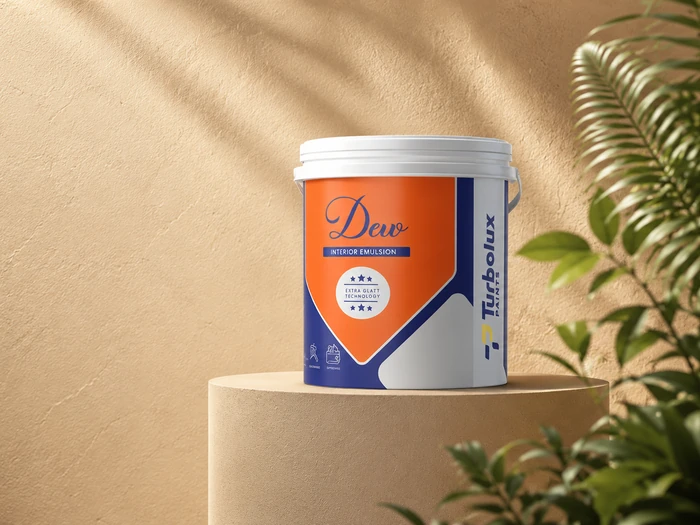
An interior emulsion with excellent whiteness and a soft sheen, made with GLATT Technology.
Interior sheen · Tinted at your dealerView Dew →
Ultra-premium weatherproof exterior emulsion with silicon additives and Lotus Effect Technology. Water beads off and dirt does not settle on the wall.
High-sheen · 12-year durability warrantyView Majestic →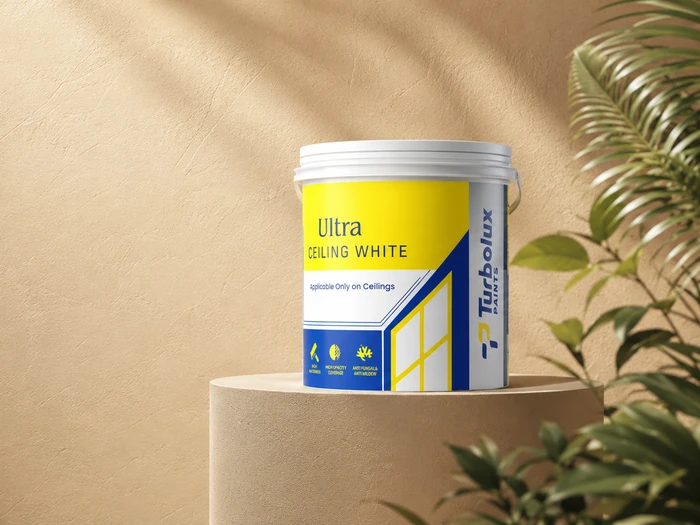
A bright white ceiling paint made with Eightling Technology for a clean, even finish overhead.
Ceiling · Bright whiteView Ultra Ceiling White →Dew can be tinted to any interior shade from the 1,260-shade range. For outside, choose two or three exterior colours that echo your interior palette. See how to pick an exterior colour and how to make colours flow room to room.
A good palette makes decisions easier: once you have it, every new room, cushion or curtain is simply chosen from the list.
Frequently asked questions
How many colours should a house palette have?
Usually 3 to 5: one main neutral, one or two supporting colours and one accent, plus exterior colours.
What is the 60-30-10 colour rule?
About 60% main colour, 30% supporting colour and 10% accent in a room or across the house.
Should every room be painted the same colour?
No. Rooms should use colours from the same palette in different amounts so the house feels connected.
How do I know if colours go together?
Check that they share the same undertone, warm or cool, and test large samples next to your floor and furniture.
Should I choose paint colour or furniture first?
Start with what will stay longest, such as floors, wood and large furniture, then choose paint to suit them.
Plan your palette with Turbolux
Visit your nearest Turbolux dealer for shade cards and sample tinting.
Find a Turbolux dealer →90728 26662 · [email protected] · Happy walls in just a stroke.