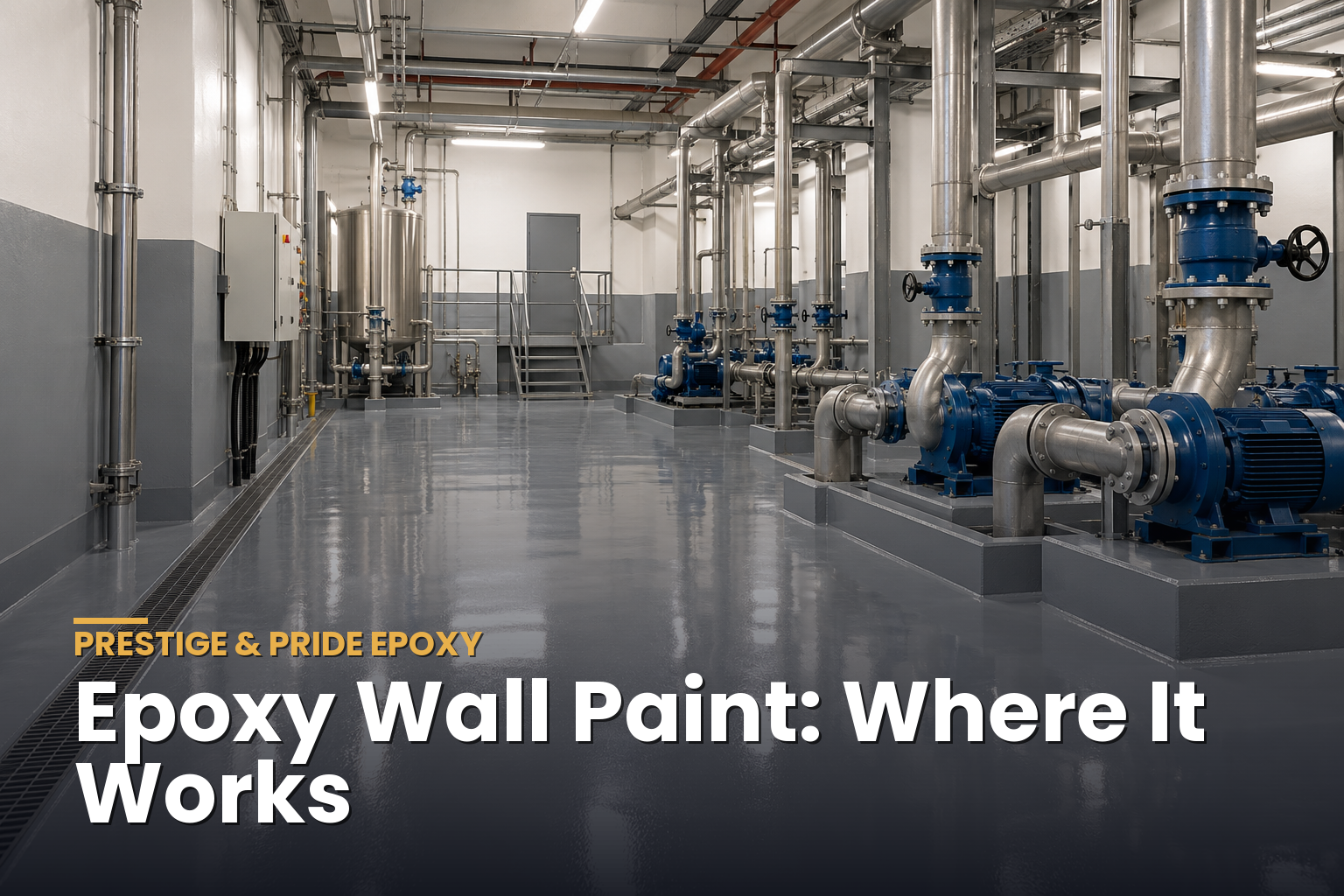
Warehouse, workshop and factory floors take oil, grease, forklifts and dragged pallets every day. An epoxy primer seals the concrete, anchors the floor system and keeps spills on the surface.
Short answer: Use an epoxy primer on a concrete floor to seal the porous surface, give the floor coating something strong to grip, and stop oil, grease and solvents soaking into the slab. The concrete must be fully cured, completely dry and free of oil, dust and loose laitance before priming. Apply two to three thin coats rather than one heavy one. With Turbolux Prestige, the surface is dry in 4 minutes, ready to recoat after 6 hours, and fully cured in 24 hours, so a floor can be primed over a weekend shutdown.
Why use an epoxy primer on a concrete floor?
Bare concrete is porous and dusty. It soaks up spills, sheds fine powder under traffic, and gives coatings a weak, crumbly surface to hold on to. An epoxy primer fixes all three problems:
- It seals the slab. The primer wets into the pores and closes them, so the floor stops absorbing oil and water.
- It anchors the system. Everything applied on top depends on this coat. A primer that grips the concrete properly is what stops the floor coating peeling under traffic.
- It resists chemicals. A good epoxy film keeps oils, greases and solvents on the surface, where they can be wiped away.
- It takes a beating. Epoxy cures hard, with high abrasion and impact resistance, so it stands up to trolleys, pallets and dropped tools.
Which floors need an epoxy primer?
Any concrete floor that carries heavy use, spills or machinery benefits from an epoxy primer:
- Warehouses and godowns with forklift and pallet traffic
- Workshops and service garages where oil and grease are spilled daily
- Factory and production floors around machinery
- Chemical plants and stores where solvent resistance matters
- Commercial car parks and loading bays
- Plant rooms, pump rooms and generator rooms
How do you prepare a concrete floor for epoxy?
Preparation decides the result. Most floor coating failures come from the slab, not the paint.
- Make sure the concrete is fully cured. New concrete needs time to cure and dry out; as a rule of thumb, allow at least 28 days, and longer in the monsoon or for thick slabs.
- Check for moisture. Tape a 30 cm square of clear plastic sheet tightly to the floor and leave it for 24 hours. If the underside is damp or the concrete darkens, the slab is still wet or moisture is rising from below. Do not prime yet.
- Remove oil and grease. Scrub oil stains with a suitable degreaser and rinse. Oil left in the slab stops the primer bonding.
- Remove laitance and loose material. The weak, powdery top skin on concrete must come off. Grinding or shot blasting gives the best surface; at minimum, scrape and wire brush.
- Repair defects. Fill cracks, pinholes and voids with a compatible epoxy filler or repair mortar, and level any rough patches.
- Vacuum thoroughly. Dust is the enemy of adhesion. Vacuum rather than sweep, and let the floor dry completely.
How do you apply epoxy primer to a concrete floor?
| Step | What to do | Prestige timing |
|---|---|---|
| 1. Stir and thin | Stir thoroughly. Thin 0 to 5% with the recommended thinner for brush or roller, about 5% for spray. | Use thinned paint within 24 hours |
| 2. First coat | Apply one thin, even coat, working it into the surface. Keep a wet edge and work away from the exit. | Surface dry in about 4 minutes |
| 3. Second coat | Apply after the recoat interval. This coat closes the film and brings up the gloss. | Minimum 6 hours after coat 1 |
| 4. Third coat (optional) | Add where the floor faces chemicals, wash-downs or heavy traffic. | Minimum 6 hours after coat 2 |
| 5. Cure | Keep traffic off until fully cured. | 24 hours to full cure |
Times are at normal ambient conditions. Low temperature, high humidity and thick coats all extend drying and recoat times. Ventilate the area well, as epoxy primers are flammable; keep heat, sparks and open flames away.
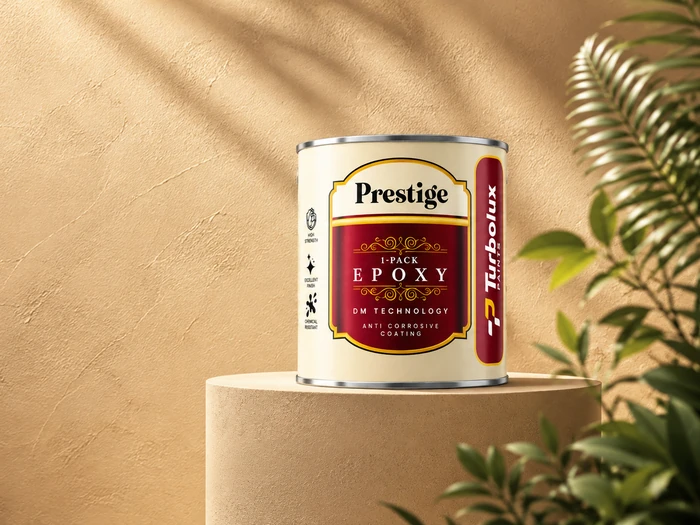
Bonds to concrete, steel and iron with superior abrasion and impact resistance. Holds out oils, greases and solvents. No mixing, no pot life.
Grey & Black · Full cure in 24 hrsView Prestige →What goes wrong with epoxy on concrete?
- Peeling in patches: almost always oil left in the slab, or dust and laitance that were not removed.
- Bubbles and blisters: moisture rising through a slab that was not fully dry, or a coat applied too thickly.
- White bloom or dull spots: applying in very high humidity, or over a damp floor.
- Soft or marked film: traffic allowed on before full cure.
- Poor coverage and bare patches: a single heavy coat instead of two or three thin ones.
For more on why paint bubbles, see our guide to paint bubbling causes and fixes. The same moisture rules apply to floors.
What about home driveways and terraces?
An industrial epoxy primer is overkill for most homes. For driveways, terraces and floor or roof tiles at home, a dedicated floor and roof coat is the simpler choice: it is built for tyres, sun and standing water, and it goes on as the finished surface. See our Everguard colour guide for shade ideas.
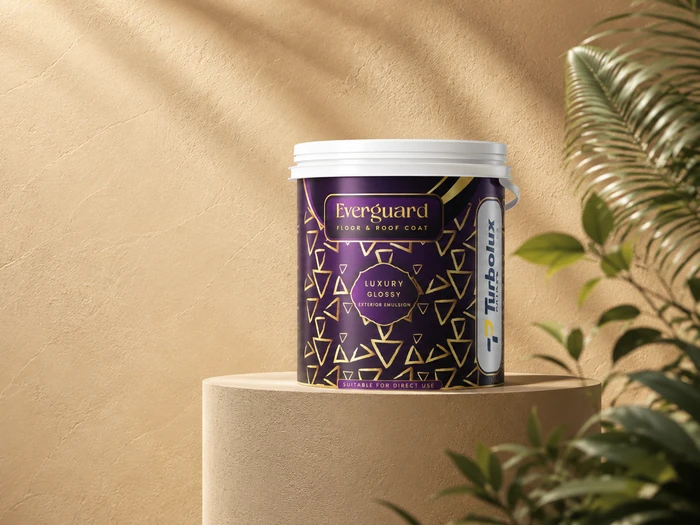
A glossy floor and roof tile coating with Hot Tyre Resistant and PU Modified Technology, for home driveways, terraces and high-traffic surfaces. No clear coat needed.
Floors, driveways & terracesView Everguard →Priming steel as well as concrete on your site? Use Prestige on the floor and heavy steel, and Pride for racking, handrails and light fabricated steel. Compare them in Prestige vs Pride.
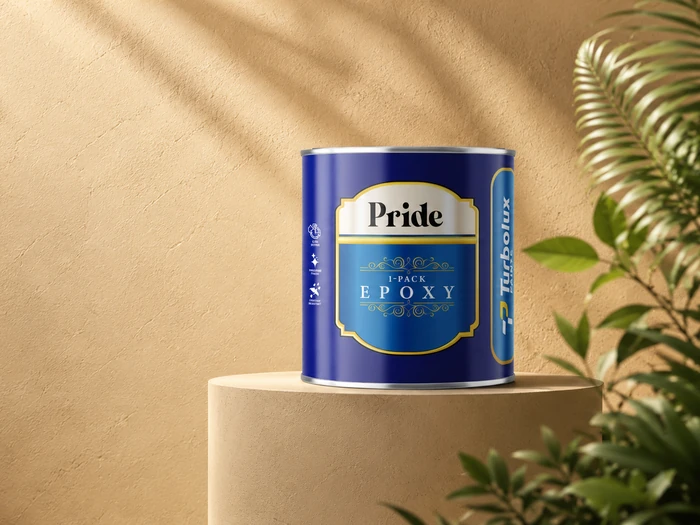
A budget-friendly epoxy primer for gates, grilles and fabricated steel. Covers 6 to 8 m² per litre on the first coat and dries to a hard, smooth gloss.
Grey & Black · Budget-friendlyView Pride →Frequently asked questions
Can I apply epoxy primer on new concrete?
Only once it is fully cured and dry. Allow at least 28 days for new concrete, longer in wet weather, and check for moisture with a plastic sheet test before priming.
How many coats of epoxy primer does a concrete floor need?
Two to three thin coats. Protection comes from building up film thickness, not from one heavy coat. Use three where the floor faces chemicals or heavy traffic.
How long before I can walk or drive on an epoxy-primed floor?
With Prestige, full cure takes 24 hours at normal ambient conditions. Keep all traffic off until then, and allow longer in cold or humid weather.
Will epoxy primer stick to an oily garage floor?
Not until the oil is removed. Degrease and scrub the stains thoroughly; oil left in the concrete is the most common reason floor coatings peel.
Is epoxy primer the same as an epoxy floor coating?
No. The primer is the base coat that seals the concrete and anchors the system. The finishing floor coat goes over it.
Planning a floor shutdown?
Talk to your nearest Turbolux dealer about priming your warehouse or workshop floor with Prestige.
Find a Turbolux dealer →90728 26662 · [email protected] · Happy walls in just a stroke.