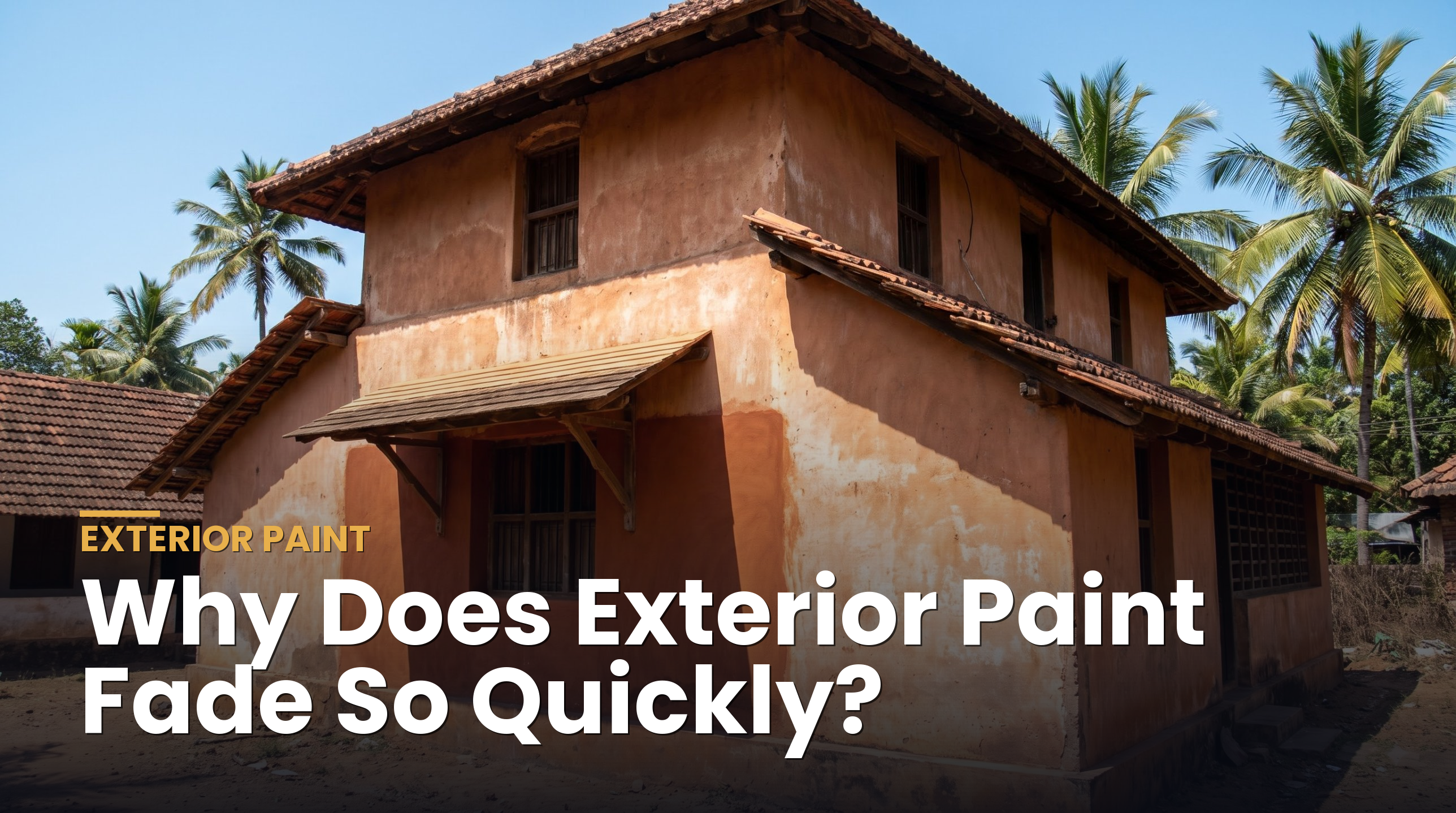
Fresh paint has a gentle glow. A year or two later the same wall can look flat, dull and tired. Here is why paint loses its shine, how to tell which cause you have, and how to bring the finish back.
Short answer: Paint loses its shine mainly because sunlight (UV) breaks down the binder at the surface of the film, leaving it rough and porous so it scatters light instead of reflecting it. Dirt settling on the wall, harsh scrubbing, an unprimed or porous surface that soaks up the paint, over-thinning, a single coat and dampness behind the paint all speed this up. To restore the finish, clean the wall, check for chalking or damp, prime if needed, and apply two coats of a quality sheen emulsion.
What makes paint shiny in the first place?
Shine, or sheen, comes from how smooth the dried paint film is. A smooth, tight film reflects light like a mirror, so it looks glossy. A rough or porous surface scatters light in all directions, so it looks matt. Sheen is measured in gloss units (GU) with a gloss meter at a 60° angle.
| Finish | How it looks | Turbolux example |
|---|---|---|
| Matt | Flat, no reflection | Hai exterior emulsion, HUE distemper |
| Soft sheen | Gentle, low glow | Dew interior emulsion, Barossa |
| Satin | Smooth, satin-like sheen | Alpha Advanced |
| Semi-gloss | Clear sheen, 17 ± 2 GU | Extra Life |
| High gloss | Mirror-like, 50 to 55 GU | Mirror Grey, Mirror Black |
So the first question is always: was the wall ever shiny? A matt or distemper finish was never meant to glow. If the wall had sheen when new and now looks flat, one of the causes below is at work.
Why does paint lose its shine?
- Sun and UV exposure. UV rays slowly break down the binder at the very top of the paint film. The surface becomes microscopically rough, and the sheen fades. South and west-facing walls lose shine fastest.
- Dirt and pollution. A thin layer of dust, smoke and road grime sits on the film and dulls it, even when the paint underneath is fine. See why exterior walls get dirty.
- Harsh cleaning. Scrubbing with abrasive powders, steel wool or strong detergents wears down the smooth top layer of an interior wall.
- Porous or unprimed surface. New plaster, putty patches or bare spots soak up the binder from the paint. The result is dull, uneven patches, often called flashing.
- Too much thinner. Over-diluted paint has less binder per square foot, so the dried film is thinner and less glossy.
- Only one coat. A single coat rarely builds enough film to develop its full sheen. Most emulsions are designed for two coats.
- Damp behind the paint. Moisture and salts moving through the wall push to the surface and leave a hazy, dull film.
- Low-quality paint. Paints with less binder and cheaper resins break down faster under sun and rain.
Is it dull paint or chalking?
A dull wall is not always a failing wall. Try these quick checks:
| Test | What you see | What it means |
|---|---|---|
| Rub with a dark cloth | Cloth stays clean | Surface dulling or dirt only |
| Rub with a dark cloth | White or coloured powder on cloth | Chalking: the binder has broken down |
| Wipe with a damp sponge | Shine returns where wiped | Dirt film; a wash will help |
| Look along the wall | Dull patches in shapes of repairs | Flashing from unprimed patches |
| Check the base of the wall | White salt deposits, damp marks | Moisture problem to fix first |
If you find chalking, the surface must be cleaned and primed before repainting. Our guide to why paint becomes powdery explains the fix step by step.
How do you bring back the shine?
- Wash first. Clean the wall with water and a mild detergent and a soft brush or sponge. Rinse and let it dry. Sometimes this alone brings back much of the sheen.
- Fix the cause. Treat damp, seepage or algae before you paint, or the new finish will dull just as quickly.
- Remove chalk and loose paint. Scrub off powder and scrape any flaking areas back to a firm surface.
- Prime porous areas. Apply a primer over new plaster, repairs and chalky surfaces so the topcoat does not soak in.
- Apply two full coats. Use a sheen emulsion at the recommended dilution, not more. Let the first coat dry fully before the second.
- Choose the right sheen. If you want a wall that stays bright and wipeable, pick a soft sheen, satin or semi-gloss finish instead of matt.
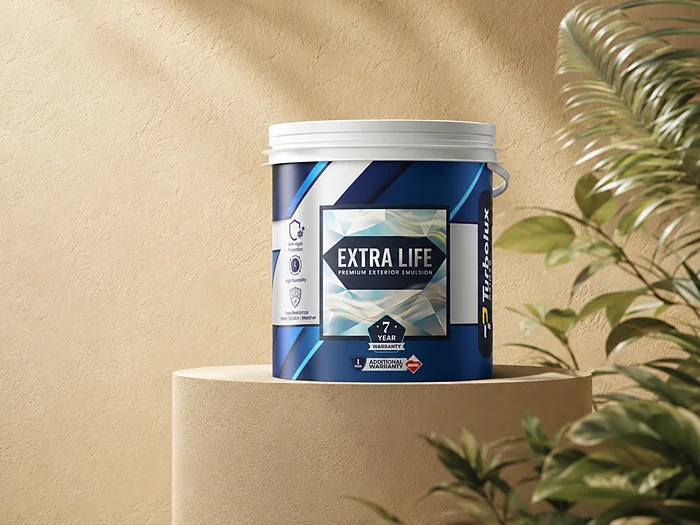
A semi-gloss exterior emulsion powered by DURASHIELD Technology, measured at 17 ± 2 GU, with advanced dirt pick-up resistance and algae and fungus protection.
Semi-gloss · ExteriorView Extra Life →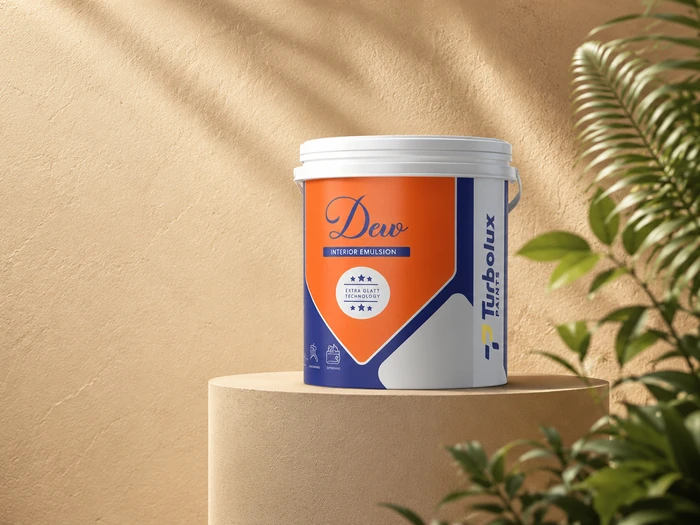
An interior emulsion with excellent whiteness and a soft sheen. GLATT Technology makes it more durable and glossy, for homes and commercial spaces.
Soft sheen · InteriorView Dew →How do you keep paint shiny for longer?
- Choose a dirt-resistant exterior finish. A tight, low-porosity film stops grime from settling in.
- Clean gently. Use a soft sponge and mild soap on interior walls. Never use abrasive powder.
- Wash exteriors once a year, ideally after the monsoon, with plain water and a soft brush.
- Keep gutters and drip edges working so rainwater does not run down the walls.
- Touch up early. Small damaged spots let water in, which spreads damage around them.
- Repaint on time. Exterior walls in hot, wet climates usually need repainting every five to seven years. See how often you should repaint.
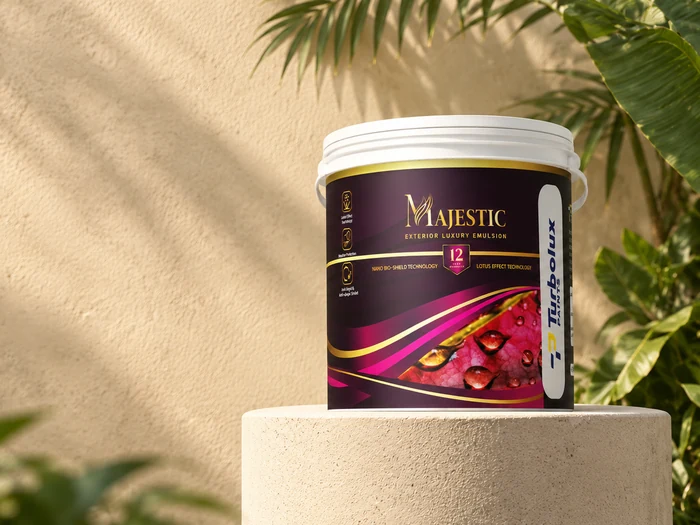
Ultra-premium weatherproof exterior emulsion with silicon additives and Lotus Effect Technology. Water beads off and dirt does not settle on the wall.
High-sheen · 12-year durability warrantyView Majestic →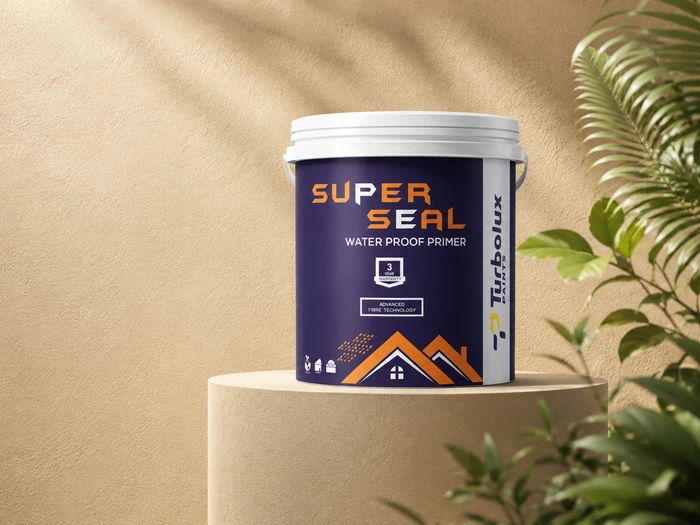
Premium acrylic primer with fibre technology that resists alkali, damp and efflorescence, giving the topcoat an even base so it dries to a uniform sheen.
Primer · Interior & exteriorView Super Seal →Frequently asked questions
Why does my new paint look dull in patches?
Usually because the paint soaked into porous areas such as fresh putty, plaster repairs or unprimed spots. Priming those areas and applying a second full coat gives an even sheen.
Can I make matt paint shiny?
Not by polishing it. A matt paint is designed to scatter light. To get a sheen, repaint with a soft sheen, satin or semi-gloss emulsion over a clean, primed surface.
Does washing a wall bring back its shine?
Often, yes. If the dullness is a dirt film, a gentle wash with water and mild soap can restore much of the original sheen. If the paint is chalking, it needs repainting.
How long does exterior paint keep its shine?
It depends on the paint quality, sun exposure and how dirty the area is. A quality exterior emulsion keeps its finish for several years, while sun-facing walls lose sheen faster than shaded ones.
Is glossy paint better for exterior walls?
A sheen finish is easier to clean and holds dirt less than matt, so it usually stays looking fresh for longer. Very high gloss is best kept for features, doors and accents.
Want your walls to glow again?
Talk to your nearest Turbolux dealer about the right primer and sheen finish for your walls.
Find a Turbolux dealer →90728 26662 · [email protected] · Happy walls in just a stroke.