If your hand comes away white when you touch the wall, the paint is chalking. Here is why it happens, how to test it, and the only fix that lasts.
Short answer: Paint becomes powdery when its binder, the resin that holds the pigment together, breaks down. The loose pigment is left on the surface as a fine powder, a problem called chalking. On exterior walls the main cause is years of sun (UV) and rain; it happens faster with low-binder economy paints, distemper, over-thinned paint and paint applied without primer. To fix it, wash off all the powder, let the wall dry, apply a primer that binds the surface, then repaint with a good-quality, UV-resistant exterior emulsion. Never paint straight over a chalky wall: the new coat will stick to the powder and peel.
What is paint chalking?
Every paint is made of pigment (the colour and hiding power), filler, and a binder that glues it all into a film and sticks it to the wall. Chalking is what happens when that binder at the surface breaks down, usually under ultraviolet light and weathering. The pigment is no longer held in place, so it sits on the surface as a loose powder that rubs off on your hand or clothes.
Some chalking is normal ageing. All exterior paints chalk slowly over their life. The problem is when it happens early, heavily, or across the whole wall, because by then the film has thinned and is no longer protecting the plaster underneath.
Signs you will notice:
- White or coloured powder on your fingers or a cloth when you rub the wall
- Colours that look faded, flat and washed out, especially darker and brighter shades
- Pale streaks running down the wall, or powder staining tiles, brickwork and windows below after rain
- A dull, lifeless surface where there was once a sheen
How do you test a wall for chalking?
Two quick tests take less than a minute:
- The cloth test. Rub a dark cloth (or a white one on a dark wall) firmly across the paint, about 10 cm, with light pressure. A faint trace is normal ageing. A thick layer of powder means heavy chalking.
- The tape test. Press a strip of clear adhesive tape onto the wall, rub it down, and peel it off. Stick it on a sheet of paper in contrasting colour. The more powder on the tape, the worse the chalking. Paint professionals use a formal version of this rating (ASTM D4214) to grade chalking from mild to severe.
Test in a few places: sunny walls, shaded walls and the areas below sunshades. The south and west-facing walls that get the most afternoon sun usually chalk first.
What causes paint to become powdery?
1. Sun and weather over time
UV light slowly breaks down paint binders, and rain washes away the loosened surface. In hot, humid climates with strong sun and heavy monsoons, this happens faster than in milder regions. Walls that have not been repainted in six or seven years will usually show some chalking. Our guide on how often to repaint covers typical cycles.
2. Low-binder economy paint
Cheaper paints often use more filler and less binder to cut cost. The film is weaker from day one and starts chalking much sooner. The price saved on the tin is usually spent again on an early repaint.
3. Distemper or lime wash used outdoors or in damp rooms
Distemper is a low-binder coating by design. It rubs off easily even when new, and in humid conditions it becomes powdery quickly. We explain why in emulsion vs distemper.
4. Paint thinned too much
Extra water dilutes the binder along with everything else. The film goes on thin and weak and chalks early. Always follow the dilution ratio on the pack.
5. No primer on a porous surface
Bare plaster and old chalky paint soak binder out of the topcoat, leaving the film underbound at the surface. A primer seals the wall so the emulsion keeps its binder where it belongs.
6. Interior paint used outside
Interior emulsions are not formulated for UV and rain. Used on an exterior wall, they chalk and fade within a season or two.
Is it chalking, efflorescence or distemper?
Three different problems can leave white powder on a wall. The fix depends on which one you have.
| What you see | What it is | What it means |
|---|---|---|
| Fine, even powder across a sunny exterior wall; colour looks faded | Chalking | The paint film has weathered and needs repainting |
| White fluffy or crystal-like patches, often in blotches, near damp areas or low on the wall | Efflorescence (salts) | Water is moving through the wall; fix the damp first |
| Powder rubs off easily inside the house, even on fairly new paint | Distemper or lime wash | A low-binder coating; upgrade to emulsion |
If you see efflorescence, repainting alone will not help. The salts will push new paint off. Start with our guide to stopping wall dampness and seepage.
How do you fix a powdery, chalky wall?
- Remove all the chalk. Scrub the wall with a stiff brush and clean water, or use a pressure washer on exterior walls. Work from top to bottom and rinse well. The goal is to get back to a firm surface.
- Scrape anything loose. Remove flaking or lifting paint with a scraper and sand the edges smooth.
- Let the wall dry completely. Allow at least a few dry days after washing, longer in humid weather.
- Test again. Repeat the cloth test. If powder still comes off, wash again. Painting over remaining chalk is the most common reason new paint peels.
- Prime. Apply a primer with a penetrating binder that locks down any fine residue and seals the surface evenly.
- Repaint with two full coats of a quality exterior emulsion with good UV resistance, at the dilution on the pack.
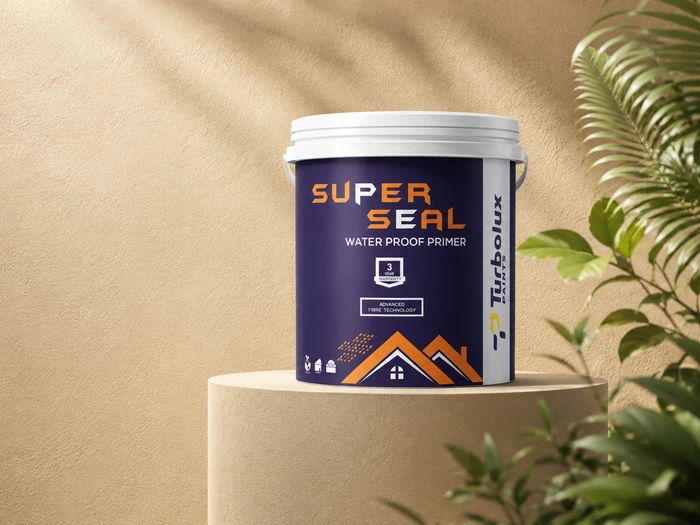
A premium acrylic primer on fibre technology with a high-performance penetrating binder. Resists alkali, damp and efflorescence, and lifts topcoat coverage by 15 to 20%.
Primer · 3-year warrantyView Super Seal →How do you stop chalking coming back?
- Choose a high-quality exterior emulsion with UV protection. Better binders hold pigment in place for longer under strong sun.
- Never skip primer on bare plaster or on a surface that was previously chalky. See do you really need a primer?
- Do not over-thin. Stick to the dilution on the pack, and use the same ratio for every tin.
- Use exterior paint outside and emulsion inside, never distemper on walls that face weather or humidity.
- Consider lighter shades on the sunniest walls. Deep and bright colours show fading and chalking sooner.
- Inspect every year after the monsoon. Our after-monsoon wall checklist includes the chalk rub test.
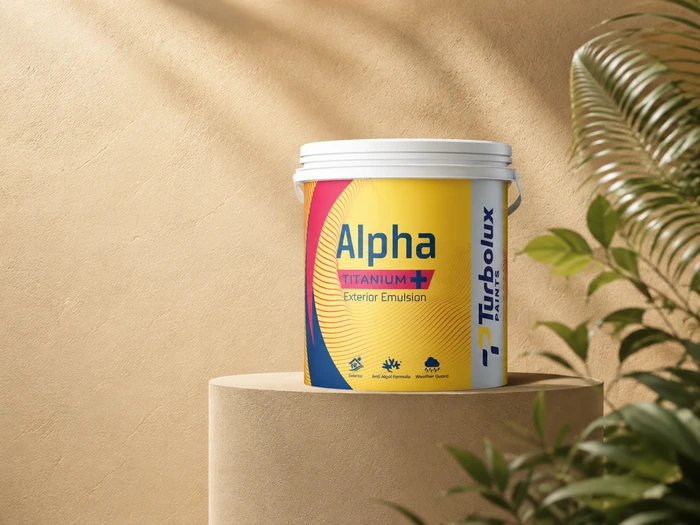
Built on a Titanium Matrix with Luminex technology for enhanced opacity and whiteness. Specially designed to resist UV rays and stay fresh, with an anti-algal formula.
Titanium white · UV resistantView Alpha Titanium + →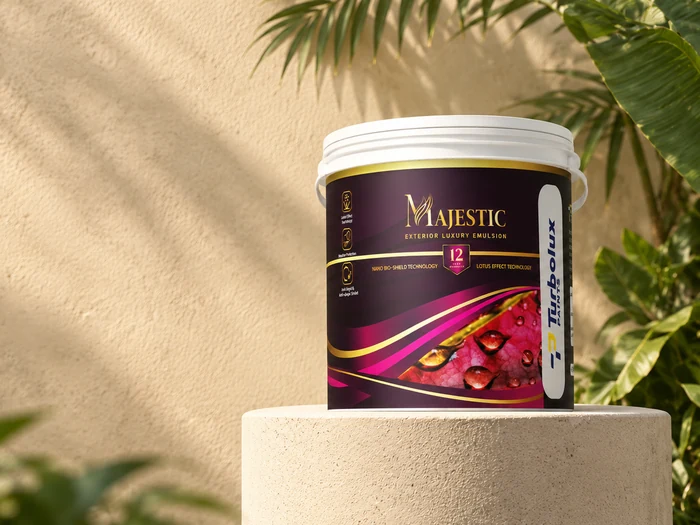
An ultra-premium weatherproof exterior emulsion with silicon additives and Lotus Effect Technology. Water beads off and dirt does not settle.
High-sheen · 12-year warrantyView Majestic →Frequently asked questions
Can I paint over chalky paint?
Not directly. New paint sticks to the loose powder instead of the wall and will peel. Wash off all the chalk, let the wall dry, prime, then repaint.
Why is my interior wall paint powdery?
Inside the house, powdery walls usually mean distemper or lime wash, which are low-binder coatings, or efflorescence caused by damp. Emulsion paint on a dry wall should not rub off.
Is paint chalking normal?
Slight chalking is a normal part of exterior paint ageing. Heavy chalking within a few years points to low-quality paint, over-thinning, no primer, or interior paint used outside.
How long does exterior paint take to start chalking?
It depends on the paint quality, colour and exposure. Good exterior emulsions resist chalking for many years; economy paints and distemper on sunny walls can chalk within one or two years.
Does washing a chalky wall damage it?
No. Washing only removes the loose powder. Let the wall dry fully afterwards, and it is ready to prime and repaint.
Bring faded, chalky walls back to life
Ask your nearest Turbolux dealer for the right primer and UV-resistant exterior emulsion for your walls.
Find a Turbolux dealer →90728 26662 · [email protected] · Happy walls in just a stroke.