
Most repaints go over old paint, and that is usually fine. But some old coatings will make even a good new paint peel. Here are five simple tests to decide whether to paint straight over, prime first or scrape back.
Short answer: Yes, you can usually paint over old paint if it is sound: firm, clean, dry and not powdery or peeling. Before repainting, do five quick tests: the tape test for adhesion, the rub test for chalking, the water test for distemper, the spirit test for oil-based paint, and a visual check for damp. If the old paint passes, clean it and apply two coats. If it fails, scrape or wash off the weak layer, prime, then paint. Never paint over flaking paint, distemper or damp patches.
When can you paint over old paint?
| Old paint condition | Paint straight over? |
|---|---|
| Firm, clean, no powder, no peeling | Yes, after cleaning |
| Slightly dirty or dull | Yes, after washing |
| Chalky or powdery | No, clean and prime first |
| Peeling or flaking | No, scrape back first |
| Distemper | No, remove it and prime |
| Damp patches or salt deposits | No, fix the damp first |
| Glossy oil-based paint | Only after sanding and the right primer |
What are the 5 tests before repainting?
- Tape test (adhesion). Press a strip of strong tape firmly on the wall and pull it off quickly. If paint comes away on the tape, the old coat is not bonding well.
- Rub test (chalking). Rub the wall with a dark cloth or your palm. White or coloured powder means chalking. See why paint becomes powdery.
- Water test (distemper). Wipe a small spot with a damp cloth. If colour comes off easily, it is likely distemper, which new emulsion will not bond to well.
- Spirit test (oil paint). Rub a cotton pad with a little rubbing alcohol on a hidden spot. Water-based paint usually softens or transfers colour; oil-based paint does not.
- Damp check. Look for bubbles, damp patches, salt deposits or a musty smell, especially at the base of walls.
Do the tests on several walls, not just one. Old paint often behaves differently on a sunny exterior wall, a damp bathroom wall and a dry bedroom wall. Pay special attention to areas that were patched or repainted in the past, since these are the spots most likely to have a different, weaker coating underneath.
What should you do if the old paint fails a test?
| Test result | What to do |
|---|---|
| Paint lifts on tape | Scrape off all loose paint, sand edges smooth, prime |
| Chalky powder | Wash and scrub off the chalk, let dry, prime |
| Distemper | Wash or scrape it off, then prime before emulsion |
| Oil-based paint | Sand to remove the gloss, clean, use a suitable primer |
| Damp or salts | Find and fix the source, let the wall dry, then prime |
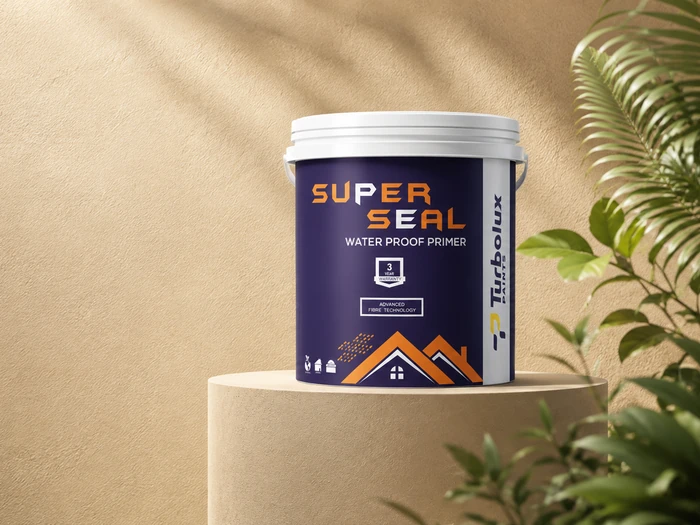
Premium acrylic primer with fibre technology that resists alkali, damp and efflorescence. Its high-opacity film lifts topcoat coverage by 15 to 20%.
Primer · Interior & exteriorView Super Seal →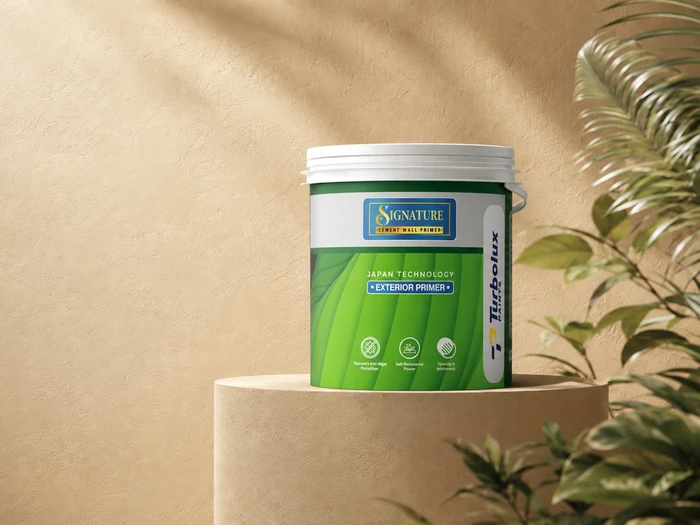
A fast-drying, water-based ceramic-technology primer for exterior walls. Anti-algal and weatherproof, with 35% salt resistance.
Primer · ExteriorView Signature →Can you paint emulsion over oil paint or distemper?
- Over distemper: not directly. Distemper is soft and powdery, so emulsion can peel off with it. Remove it and prime first. See emulsion vs distemper.
- Over oil paint: only after sanding off the gloss and using a primer suitable for the surface. Ask your dealer which primer fits.
- Over old emulsion: yes, if it is sound. Clean it and apply two coats.
- Over gloss emulsion: lightly sand to give the new coat something to grip.
How do you prepare old paint for a new coat?
- Wash the walls with water and mild detergent to remove dust and grease, then rinse and dry.
- Scrape and sand any loose or flaking areas back to a firm edge.
- Fill cracks and holes and sand smooth.
- Spot-prime repairs and bare patches so they do not show through as dull spots.
- Apply two coats of topcoat, letting each coat dry fully.
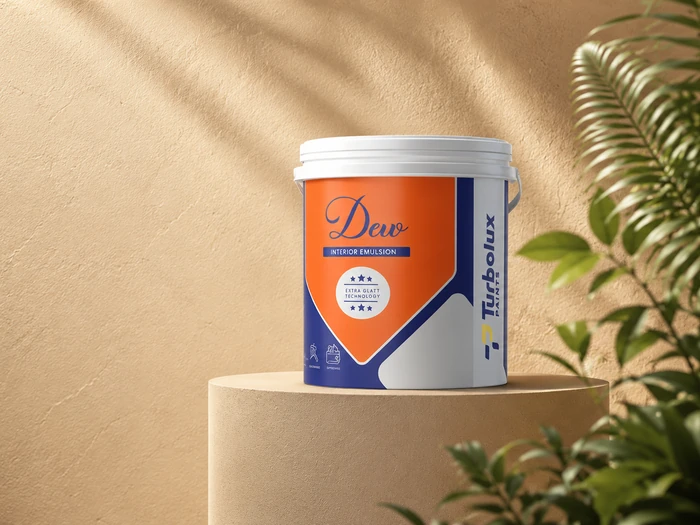
An interior emulsion with excellent whiteness and a soft sheen. GLATT Technology makes it more durable and glossy, for homes and commercial spaces.
Interior sheen · Tinted at your dealerView Dew →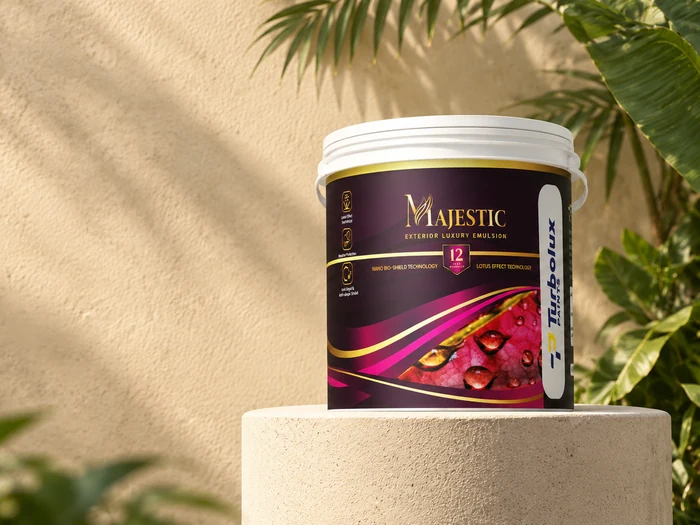
Ultra-premium weatherproof exterior emulsion with silicon additives and Lotus Effect Technology. Water beads off and dirt does not settle on the wall.
High-sheen · 12-year durability warrantyView Majestic →For more on preparation, see our painter checklist and why paint peels.
Frequently asked questions
Can I paint over old paint without primer?
Yes, if the old paint is sound, clean and the same type. Prime any repaired, bare, chalky or stained areas, and prime fully if changing from distemper or oil paint.
Do I need to remove old paint before repainting?
Only if it is peeling, flaking, powdery or distemper. Sound old paint can be cleaned and painted over.
How do I know if my wall has distemper?
Wipe a small area with a damp cloth. If colour comes off easily, it is likely distemper.
Can I paint emulsion over oil-based paint?
Not directly. Sand off the gloss, clean the surface and use a suitable primer before applying emulsion.
Why is my new paint peeling off the old paint?
Usually because the old paint was chalky, dirty, damp, distemper or glossy, so the new coat could not bond.
Planning a repaint?
Visit your nearest Turbolux dealer for the right primer and paint for your walls.
Find a Turbolux dealer →90728 26662 · [email protected] · Happy walls in just a stroke.