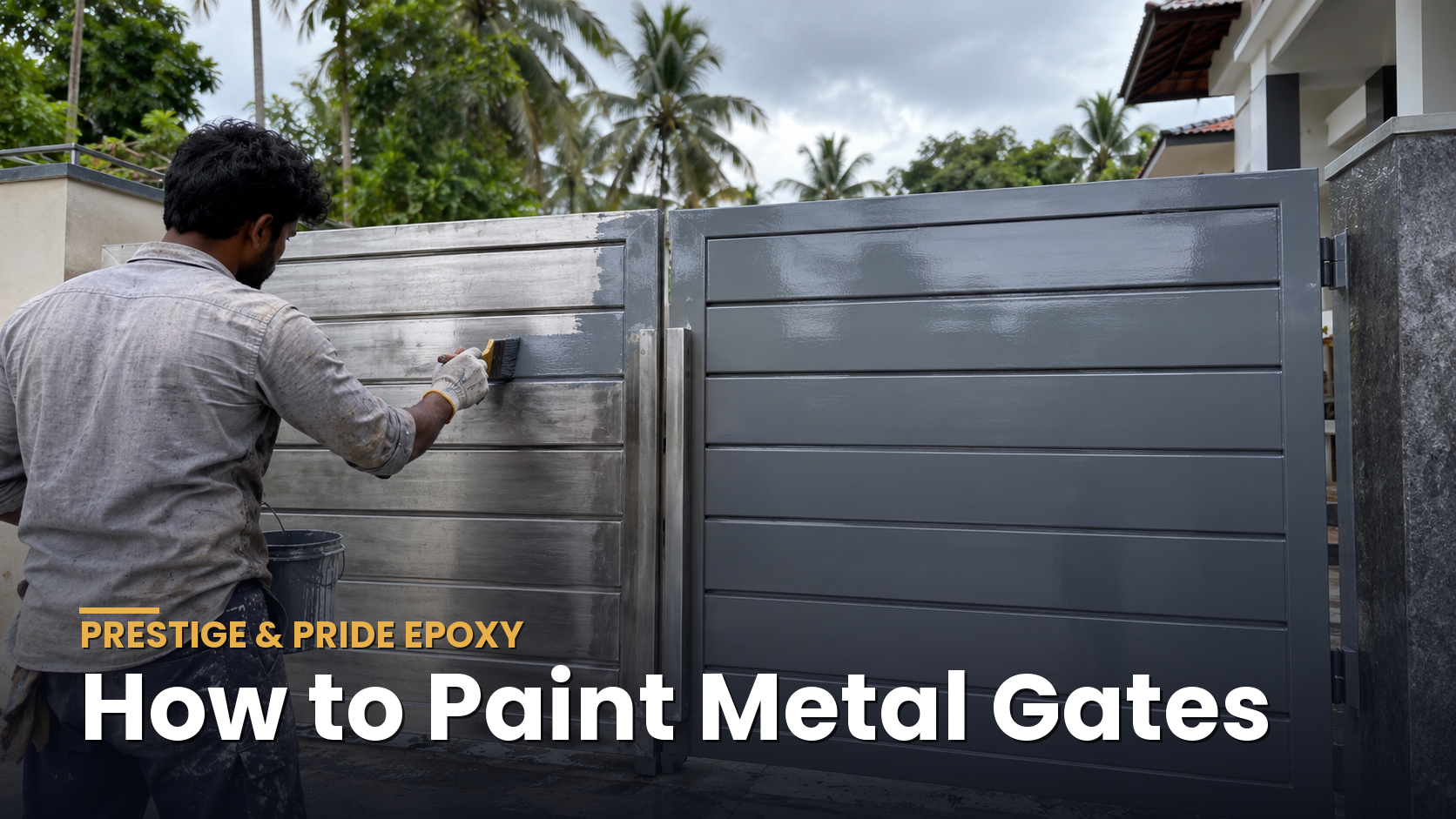
Epoxy coatings are tough, washable and chemical resistant, which is why people ask about them for walls. They are the right choice in some buildings and the wrong one in most homes. Here is how to tell.
Short answer: Epoxy wall paint is a hard, low-permeability coating that resists water, oil, grease and chemicals and can be washed repeatedly. That makes it a good choice for walls in factories, workshops, plant rooms, warehouses and other industrial or wash-down areas. It is usually the wrong choice for living spaces in a home: epoxy films do not let the wall breathe, so moisture in the plaster gets trapped and lifts the coating, and they are not designed for long exposure to direct sun. For house walls, a quality interior or exterior emulsion is the better option.
What is epoxy wall paint?
Epoxy paints use an epoxy resin binder instead of the acrylic binder found in normal wall emulsions. When it cures, epoxy forms a dense, hard, often glossy film. That film:
- Resists water, oil, grease and many solvents
- Stands up to scrubbing, knocks and abrasion
- Bonds strongly to concrete and steel
- Has low permeability, so liquids and vapour do not pass through easily
Those strengths come with trade-offs. A coating that stops water getting in also stops moisture getting out, and most epoxy films are built for protection rather than for long-term colour and gloss under strong sunlight.
Where does epoxy work well on walls?
Epoxy earns its place on walls that face spills, chemicals, heavy cleaning or impact:
- Factory and production walls, especially the lower part of the wall around machinery
- Workshops and service garages, where oil and grease splash onto walls
- Plant rooms, pump rooms and generator rooms
- Warehouses, particularly dado bands where pallets and trolleys hit the wall
- Chemical stores and processing areas, where solvent resistance matters
- Steel columns, beams and structural members inside these buildings
In these spaces, the wall is usually dry, fully cured concrete or block, and the priority is protection and easy cleaning, not breathability or decorative colour.
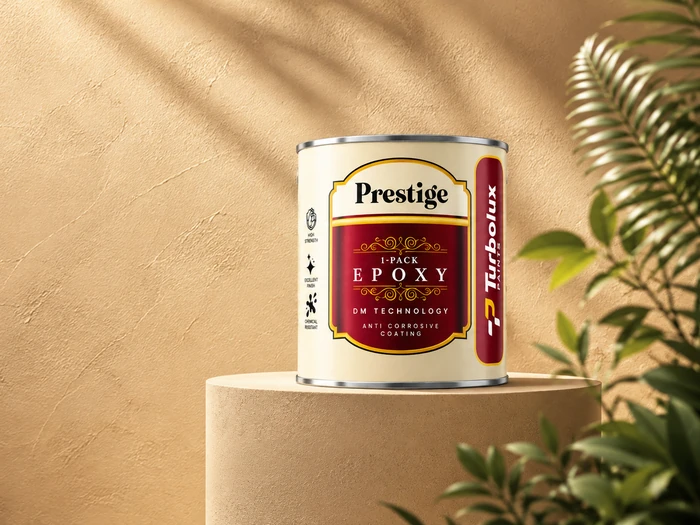
Bonds to concrete, steel and iron, and holds out oils, greases and solvents. Surface dry in 4 minutes, full cure in 24 hours. Rated for interior and exterior use.
Grey & Black · Concrete & steelView Prestige →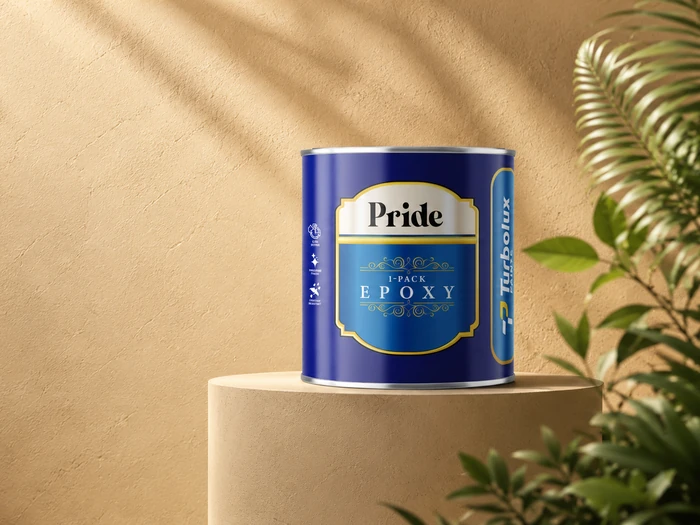
A budget-friendly epoxy primer for the steel in your building: columns, racking, railings and fabricated frames. Covers 6 to 8 m² per litre on the first coat.
Grey & Black · MetalView Pride →Why is epoxy usually wrong for home walls?
1. Plaster walls need to breathe
Cement plaster and masonry always hold some moisture, and in a humid climate that moisture moves in and out with the seasons. Emulsions let vapour pass through. A low-permeability epoxy film traps it, and the trapped moisture eventually pushes the coating off as bubbles and peeling. Our guide to why paint bubbles on walls explains the mechanism.
2. Sunlight is hard on epoxy
Epoxy films are built for protection, not for long-term colour stability in direct sun. On sunny exterior walls they tend to dull and chalk sooner than a good exterior emulsion made for UV exposure.
3. Limited colours and a heavy look
Epoxy coatings come in a narrow range of utility colours with an industrial gloss. Emulsions are tinted to thousands of shades and come in finishes from matt to high sheen.
4. Harder to repaint later
New paint does not grip well on a hard, glossy epoxy film without sanding and the right primer, so changing colour later becomes a bigger job.
Epoxy vs emulsion: which should you use?
| Epoxy coating | Wall emulsion | |
|---|---|---|
| Best for | Industrial, workshop and wash-down walls; steel and concrete | Homes, offices, shops and most building exteriors |
| Chemical and oil resistance | High | Low to moderate |
| Breathability | Low | Allows moisture vapour to escape |
| Direct sunlight | Not its strength | Exterior emulsions are designed for UV and rain |
| Colours | Limited utility colours | Wide range; Turbolux tints 1,260 shades |
| Washability | Excellent | Good to excellent in quality emulsions |
| Repainting later | Needs sanding and the right primer | Straightforward |
For a home, choose a washable interior emulsion inside and a weatherproof exterior emulsion outside. Keep epoxy for the steel around the house (gates, grilles, railings) and for garages or workshops. See our guide to painting metal gates and grilles.
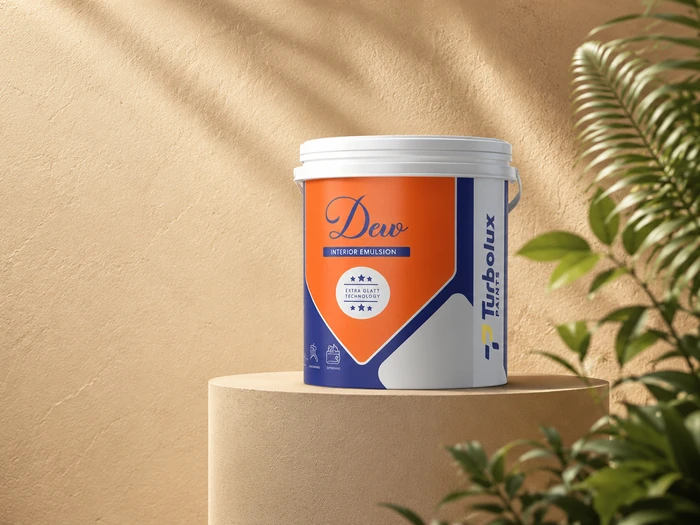
For home interiors: excellent whiteness and a soft sheen, with GLATT Technology for a durable, washable finish in 1,260 shades.
Interior sheenView Dew →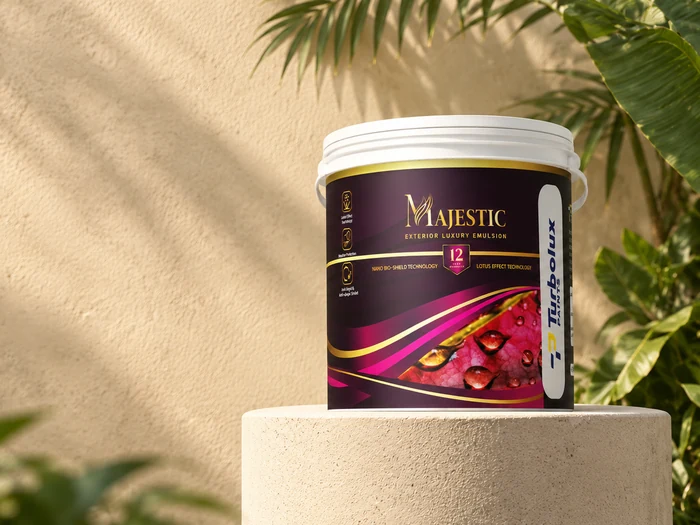
For home exteriors: ultra-premium weatherproof emulsion with Lotus Effect Technology. Water beads off and dirt does not settle.
High-sheen · 12-year warrantyView Majestic →How do you prepare a wall for an epoxy coating?
If epoxy is right for your space, preparation decides whether it lasts.
- Make sure the wall is fully cured and dry. New concrete and plaster need at least 28 days, longer in wet weather. Never coat a damp wall.
- Clean thoroughly. Remove dust, dirt, oil, grease and any loose or flaking old paint.
- Repair defects. Fill cracks, pinholes and voids with a compatible epoxy filler or repair mortar.
- Prime. Apply an epoxy primer such as Prestige in two to three thin coats, at least 6 hours apart.
- Let it cure. Allow 24 hours for Prestige to reach full cure before the area goes back into service or the next system coat goes on.
The same rules apply to floors. Our guide to epoxy primer for concrete floors goes into detail.
Frequently asked questions
Can I use epoxy paint on interior walls at home?
It is not usually recommended. Epoxy traps moisture in plaster walls, which can lead to bubbling and peeling, and it offers limited colours. A washable interior emulsion is the better choice for living spaces.
Is epoxy paint waterproof?
An epoxy film has low permeability and resists water well once fully cured. That same property is why it should only go on walls that are completely dry, or trapped moisture will lift it.
Where should epoxy be used in a building?
On industrial floors and walls, workshops, plant rooms, warehouses and chemical areas, and on structural steel, tanks, pipelines and machinery.
Can epoxy be used on exterior walls?
Epoxy primers like Prestige are rated for exterior use, especially on steel and concrete. For the decorative finish on a house exterior, a weatherproof exterior emulsion performs better in sun and rain.
Can I paint emulsion over epoxy later?
Only with proper preparation. The glossy epoxy film needs to be cleaned and sanded, and a suitable primer applied, so the new coat can grip.
Epoxy where it works, emulsion where it doesn’t
Tell your nearest Turbolux dealer what you are painting and they will recommend Prestige, Pride or the right emulsion.
Find a Turbolux dealer →90728 26662 · [email protected] · Happy walls in just a stroke.