The weeks after the monsoon are the best time to find the damage the rain has done, before it spreads. Here is a 12-point walk-around you can do in under an hour.
Short answer: After the monsoon, check your walls for six things: green or black algae patches, damp patches and tide marks, white salt deposits (efflorescence), cracks, peeling or bubbling paint, and chalky, faded paint. Outside, look closely at parapets, sunshades, window sills and the terrace; inside, check ceilings, corners behind furniture, skirting level and walls next to bathrooms. Most findings only need cleaning or a small repair, but damp that keeps coming back and cracks wider than about 1 mm need attention before the next heavy rain.
Take your phone and photograph everything you find. Comparing photos next year tells you whether a problem is growing.
When should you check your walls after the monsoon?
Do the walk-around once you have had a week or so of mostly dry weather. Damp patches are easiest to see while the walls are still drying out, and algae is at its most visible right after the rains. In Kerala, that usually means October, as the south-west monsoon withdraws. In Tamil Nadu and the southern tip of the peninsula, the north-east monsoon brings its heaviest rain from October to December, so do this check now, before those rains arrive, and fix anything urgent first.
What should you check on the outside?
1. Green and black patches
Algae and fungus grow wherever water sits on a wall: under sunshades, behind trees, on north-facing walls and anywhere a gutter overflows. Small patches can be scrubbed off; wide or returning growth means the paint film has lost its protection. Our guide on stopping algae and fungus coming back explains the fix.
2. Cracks
Look along the walls, especially around window and door corners and where the wall meets columns and beams. Fine hairline cracks are common and mostly cosmetic, but they let rainwater in, so fill them before repainting. See our guide to hairline cracks on walls.
3. Peeling, flaking or bubbling paint
Lifting paint almost always means water is getting behind the film. Note where it is, because the source is usually just above: a leaking sill, a sunshade without a drip groove, or a crack in the parapet.
4. Chalky, faded paint
Rub the wall with a dark cloth or your palm. If it comes away covered in white powder, the paint is chalking. Chalky paint has worn thin, protects the wall less, and needs a proper wash and repaint rather than just another coat.
5. Parapets, sunshades and window sills
These horizontal surfaces take the most water. Check the tops for cracks and the undersides for stains and dripping marks. A sunshade without a drip groove sends water straight back onto the wall below.
6. Terrace and roof
Look for areas where water stood for hours after rain (ponding), cracks in the surface, damaged joints around pipes, and blocked drain outlets. A terrace that leaks is often the hidden cause of stained ceilings downstairs. Our roof leakage checklist goes deeper.
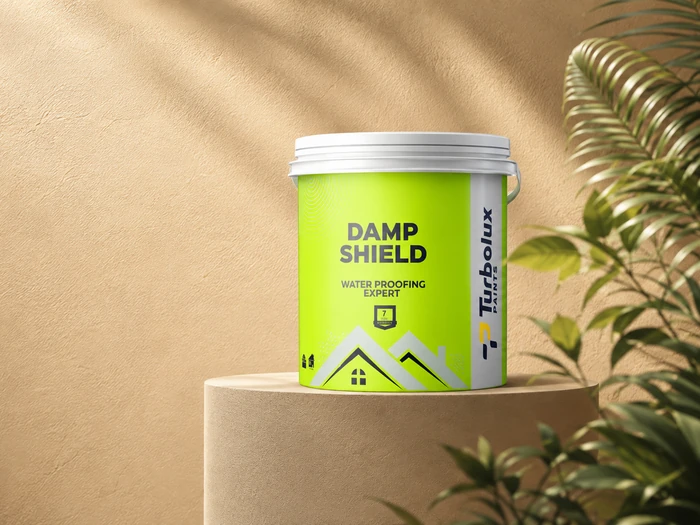
An elastomeric waterproof coating for terraces and roofs. It forms a flexible layer that bridges fine cracks and keeps rainwater out of the slab.
Terrace & roof coatingView Damp Shield →What should you check inside?
7. Ceilings
Brown rings or yellow stains on the ceiling point to water coming through the roof or from a bathroom above. Press gently: if the plaster feels soft, the leak is active.
8. Corners and behind furniture
Pull wardrobes and beds a little way from outer walls. Black spots here are mould, caused by trapped humidity and poor air movement. Our guide to black spots and mould indoors explains how to treat it.
9. Skirting level
A damp band along the bottom of the wall, often with a wavy tide mark, is rising damp from the ground. It tends to get worse every monsoon if left alone.
10. Walls next to bathrooms and kitchens
Damp patches on the other side of a bathroom wall usually come from failed tile joints or a leaking concealed pipe, not from rain.
11. White powder or crystals
This is efflorescence: salts carried to the surface by water moving through the wall. It is a sign of moisture, not a paint fault, and it will push fresh paint off if you simply paint over it.
12. Swollen woodwork and sticking doors
Doors and windows that stick after the rains tell you where the wall around them has been taking in water. Check the paint on the frame and the wall joint beside it.
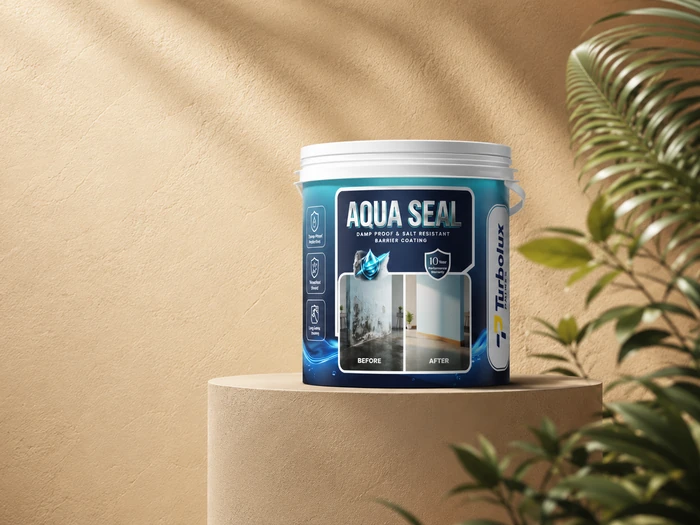
A damp-proof, salt-resistant barrier coating on Nano-Polymer Technology that stops dampness and efflorescence at the source on interior walls.
Barrier coat · 10-year warrantyView Aqua Seal →How serious is what you found?
| What you found | How urgent | What to do |
|---|---|---|
| Light algae, dust and rain streaks | Low | Wash the wall; plan a repaint if it keeps returning |
| Chalky or faded paint | Low to medium | Wash, prime and repaint in the dry season |
| Hairline cracks | Medium | Fill with crack filler before the next rains |
| Peeling or bubbling paint | Medium | Find the water source, scrape back and repaint |
| Efflorescence or damp at skirting level | Medium to high | Treat the damp before any repainting |
| Ceiling stains or soft plaster | High | Fix the roof or plumbing leak now |
| Cracks wider than about 1 mm, diagonal, or growing | High | Ask a structural engineer before painting |
Should you repaint now or wait?
Fix leaks and cracks now, but give the walls time to dry before repainting. As a guide, wait for two to three weeks of dry weather after the last heavy rain. A painter or dealer with a moisture meter can confirm the wall is dry enough. Painting over a wet wall traps the moisture and leads to the same peeling and bubbling you are trying to fix.
For most of Kerala, the dry months from December to April are the ideal repainting window. Our month-by-month painting guide shows when to book, and how often to repaint helps you decide if it is time.
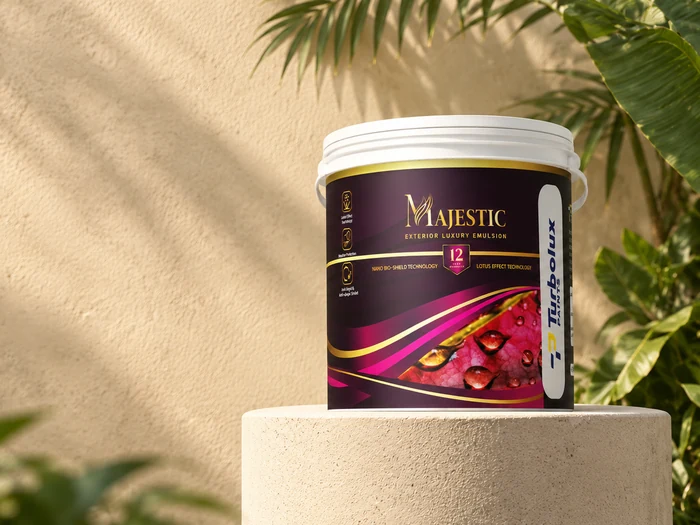
An ultra-premium weatherproof exterior emulsion with Lotus Effect Technology. Water beads off and dirt does not settle, so walls come through the next monsoon cleaner.
High-sheen · 12-year warrantyView Majestic →Frequently asked questions
How long after the monsoon can I paint my house?
Wait for about two to three weeks of dry weather after the last heavy rain, so the walls dry out fully. Painting a damp wall traps moisture and causes peeling and bubbling.
How do I know if my wall is still damp inside?
Tape a 30 cm square of clear plastic sheet tightly to the wall and leave it for 24 hours. If droplets form underneath, moisture is still coming from inside the wall. A moisture meter gives a more exact reading.
Is algae on the exterior wall harmful to the building?
Algae itself is mostly a surface problem, but it holds water against the wall and breaks down the paint film, which lets more water in over time. Clean it off and repaint with an anti-algal exterior emulsion.
Are hairline cracks after the monsoon a structural problem?
Usually not. Fine hairline cracks are common and mostly cosmetic. Cracks wider than about 1 mm, diagonal cracks from window corners, or cracks that keep growing should be checked by a structural engineer.
Can I just paint over efflorescence?
No. The salts will keep coming through and push the new paint off. Stop the moisture source, brush off the salts once the wall is dry, then use a damp-proof coating and primer before repainting.
Found something? Fix it before the next rains
Talk to your nearest Turbolux dealer about the right waterproofing, primer and topcoat for your walls.
Find a Turbolux dealer →90728 26662 · [email protected] · Happy walls in just a stroke.